Blog, Press

Open Letter to the Ghana Catholic Bishops

Open Letter from the Interfaith Diversity Network of West Africa to the Most Rev.
Philip Naameh, Chair of the Ghana Catholic Bishops Conference

05 March 2024

Dear Most Rev. Philip Naameh,

We urge you and the Catholic bishops in Ghana to reconsider your stance toward the now-passed “Human Sexual Rights and Family Values Act, 2024.” Ask the President not to assent to it. Pledge to support LGBT+ Ghanaians with human rights advocacy and pastoral care. Take back the religious independence which this Act wrongfully arrogates to the civil authority.

We urge you and your fellow bishops to read the Act carefully. This Act criminalizes people who “hold out as” LGBT+ (section 4.1). It criminalizes spiritual caregivers, family, and friends, who do not immediately report LGBT+ people to the police (sections 4 and 17). And it protects anti-LGBT+ media which styles itself as a “response to any form of advocacy or activism,” no matter how “graphic” or hateful that media may be

  • Criminalizing people on the basis of their inward dispositions is wrong. As Pope Francis stated on 5 February, 2023: “Criminalising people with homosexual
    tendencies is an injustice.” We urge you to follow the Pope’s leadership.
  • LGBT+ people often share their thoughts and their struggles with spiritual
    caregivers, family, and friends. Forcing these caregivers to report LGBT+ people
    to the police is a shocking overreach of government power. How can spiritual
    leaders like yourselves tolerate such a provision in the law?
  • Giving sanction to graphic anti-LGBT+ propaganda in education, instruction, and
    public media encourages hatred and violence. To support this kind of legalized
    vitriol is to cry “Peace! Peace!” where there is no peace (Jer 6:14).

Your support for this Act has created panic among many of the LGBT+ people of Ghana, and among many of the people who love them. Those who look to you for action are desperate. Many turn to the Church as a last place of refuge and support. Do not chase souls away. Do not lead our society into greater conflict and vitriol. Do not abandon the persecuted, and lead their persecutors astray.

IDNOWA affirms the teaching of the Catholic Church that LGBT+ people “must be accepted with respect, compassion, and sensitivity;” that “every sign of unjust discrimination in their regard should be avoided” (CCC 2358).

We believe that our sexual orientations and gender identities belong to God’s creation and are part of his plan for the salvation of humankind, while the Magisterium of the Catholic Church teaches that “homosexual acts are intrinsically disordered” and that “under no circumstances can they be approved” (CCC 2357). On this we disagree.
But we affirm with you the Magisterium’s teaching on the dignity of LGBT+ people: “It is deplorable that homosexual persons have been and are the object of violent malice in speech or in action. Such treatment deserves condemnation from the Church’s pastors wherever it occurs. It reveals a kind of disregard for others which endangers the most fundamental principles of a healthy society.” No matter what a person may “hold out” to be, “the intrinsic dignity of each person must always be respected in word, in action and in law” (Letter to the Bishops of the Catholic Church on the Pastoral Care of Homosexual Persons, 10). On this, all people of good will should agree.

Now that the Act has been passed by Parliament, the Ghanaian government has begun to weigh its costs and its dangers. The bishops, too, should weigh its effects very carefully.

We urge you to ask the President not to assent to it.

We urge you to pledge your support for the human rights of LGBT+ Ghanaians; and for their right to access pastoral care and personal counselling in freedom.

If this law gains Presidential assent, we urge you to support LGBT+ Ghanaians and the people who love them with legal assistance. Give them lawyers and legal support when they are arrested and jailed under this unjust and un-Christian law.

In the past several years, IDNOWA has made efforts to engage with you and the Ghana Catholic Bishops Conference, but we have never received an invitation to further dialogue. In the spirit of synodality, ask us to talk with you. Walk together with us, so that you can hear the voices of LGBT+ Ghanaians – both Catholic and non-Catholic. Let us together build a more peaceful, more just society.


Sincerely, Davis Mac Iyalla
Executive Director of Interfaith Diversity Network of West Africa interfaithdiversitynowa@gmail.com

Blog, Events, Press

IDNOWA visits the Centre for Religion and Public Life, Ghana

IDNOWA’s Executive Director, Davis Maclyalla paid a courtesy visit to the Executive Director and staff of the Centre for Religion and Public Life Ghana in their Accra office on Tuesday, 30th January 2024. IDNOWA visited the centre to discuss collaboration and to explore avenues for providing inclusive, safe, and pastoral care for marginalised people in Ghana, mostly the LGBT+ people. IDNOWA was well received, and we presented the CRPL-Ghana team with copies of our booklet, where we have documented the violation of the human rights of LGBT+ persons in Ghana. There is much evidence to engage parliamentarians and government to state why the anti gay bill shouldn’t be passed .

Blog, Press

Ghana Cardinal Peter Turkson: It’s time to understand homosexuality

by Redaction Africannews -Taken from Africannews – https://www.africanews.com/2023/11/27/ghana-cardinal-peter-turkson-its-time-to-understand-homosexuality/

A prominent Ghanaian priest, cardinal Peter Turkson of the Roman Catholic church has spoken against criminalizing homosexuality, challenging the proposed bill in Ghana’s parliament that seeks severe penalties for the LGBTQ+ community.

This statement contradicts the position of other Roman Catholic bishops in Ghana who have labelled homosexuality a crime.

The backdrop of this discussion involves ongoing parliamentary debates on a bill that could lead to three-year prison sentences for identifying as LGBT, with up to 10 years for those advocating for LGBTQ+ rights.

Cardinal Turkson’s perspective diverges from the traditional stance of the Church, aligning more closely with Pope Francis, who recently indicated openness to blessing same-sex couples.

However, the Pope clarified that the Church still considers same-sex relationships as “objectively sinful” and does not endorse same-sex marriage.

In a recent interview with the BBC, Cardinal Turkson emphasized the need for education to foster understanding of homosexuality, asserting that LGBT individuals should not be criminalized since they have committed no crime.

Despite acknowledging cultural nuances, Cardinal Turkson criticized the influence of foreign donations on African countries’ anti-LGBT measures, cautioning against imposing positions on cultures not ready to accept them.

This commentary comes amid similar legislative developments in other African nations, such as Uganda, where a law proposing life imprisonment and even death penalties for homosexuality has raised international concerns.

Cardinal Turkson, the first-ever Ghanaian cardinal appointed in 2003, holds a prominent position as the chancellor of the Pontifical Academies of Sciences.

Additional sources • BBC

Blog, Press

69 people arrested over ‘gay wedding’ in Nigeria freed on bail

As reported by Sky News – https://news.sky.com/story/69-people-arrested-over-gay-wedding-in-nigeria-freed-on-bail-12965128

A police spokesman said the men and women were arrested “for allegedly conducting and attending a same-sex wedding ceremony”, before adding that homosexuality “will never be tolerated” in Nigeria.

Sixty-nine people arrested after Nigerian police raided an alleged gay wedding have been released on bail.

They were arrested last month in one of the biggest mass detentions targeting homosexuality in Nigeria, where gay weddings are illegal.

A court in Warri, Delta state, ruled on Tuesday that those being held would be freed after each posting 500,000 naira (£520) bail. State prosecutors opposed the move.

The detainees, who did not appear in court, were also ordered to sign a register once a month until their next hearing, according to their lawyer Ochuko Ohimor.

The arrests happened after a tip-off in a police interrogation of someone who allegedly knew about the event, police said.

Officers stormed a hotel in Ekpan where the alleged gay wedding was being held and initially arrested 200 people.

Police spokesman Edafe Bright said at the time: “The policemen chased and arrested… suspects both male and female for allegedly conducting and attending a same-sex wedding ceremony.”

The spokesman added that homosexuality “will never be tolerated” in Nigeria.

Amnesty International’s Nigeria office condemned the arrests and called for “an immediate end to this witch hunt”.

Nigeria brought in an anti-gay law in 2014 and generally sees homosexuality as immoral on cultural and religious grounds. Some other countries in Africa also share these views.

The legislation in Nigeria includes a prison term of up to 14 years for those convicted under the Same Sex Marriage Prohibition Act, and bans gay marriage, same-sex relationships, and membership of gay rights groups.

Cross-dressing is not illegal but tends to not be socially acceptable.

Blog, Events, Press

West African Lesbian, Bisexual and Queer (LBQ) Women Share Their Stories  

When IDNOWA launched the inaugural Lesbian, Bisexual and Queer Women’s Caucus last year we had no idea how popular it would be. As the caucus begins to organize we are amazed at the amount of interest and participation we received across Ghana and beyond.

The IDNOWA caucus for LBQ Interfaith Women is the only of its kind in Ghana, and the interest in the caucus projects proved that many have known for a long time: it is desperately needed. The stories have made it clearer for us to see and understand that More attention needs to be paid to LBQ women’s issues, and we need to find ways to create opportunities to have conversations about Women’s issues discussed and be supported at the centre of our advocacy.

IDNOWA LBQ Caucus is proud to be partnering with Outright International who provided funding and support for this project.   

 We hope to bring lbq women’s issues into focus. This caucus creates an opportunity for all of us to learn, share information and make connections, and we want to encourage all lbq women and allies to sign up for our newsletter for updates and information.

We sincerely thank all of our members and contributors for their time and commitment.

Read the stories here – STORIES OF  LBQ WOMEN IN GHANA

Blog, Press

Archbishop of Canterbury decries Ugandan church support for severe anti-gay legislation

IDNOWA executive director, Davis Mac-iyalla, welcomes the statement from the Archbishop of Canterbury. It was important that he reminded the Ugadan Church leaders and other African religious leaders that homophobia and supporting the criminalisation of LGBT+ people is unchristian and unanglican.  

Just recently Pope Frances echoed the same Christian principle denouncing laws criminalising LGBT+ people as sin and injustice. 

IDNOWA will continue to advocate for the full inclusion and affirmation of LGBT+ people in West Africa until respect for equality and human rights are achieved. 

The following story first appeared on the website https://www.modernghana.com/news/1236902/archbishop-of-canterbury-decries-ugandan-church.html and was written by RFI

The head of the worldwide Anglican Communion has expressed his “grief and dismay” to the Ugandan Church over its support for the country’s anti-gay law.

Last month, Uganda’s President Yoweri Museveni signed into law a controversial anti-gay bill, introducing draconian measures against homosexuality that have been described as among the world’s harshest.

Under the legislation, identifying as gay would not be criminalised, but “engaging in acts of homosexuality” would be an offence punishable with life imprisonment.

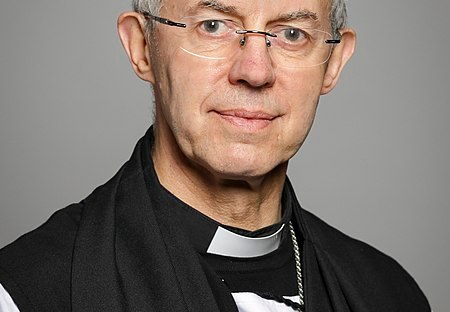
This Friday, the head of the Anglican church, Archbishop of Canterbury Justin Welby said in a statement: “I have recently written to my brother in Christ, the Primate of Uganda, Archbishop Stephen Kaziimba, to express my grief and dismay at the Church of Uganda’s support for the Anti-Homosexuality Act.”

“I make this public statement with sorrow, and with continuing prayers for reconciliation between our churches and across the Anglican Communion,” he added.

‘The African way’

Kaziimba expressed support for the bill, saying that “homosexuality is currently a challenge in Uganda because it is being forced on us by outside, foreign actors against our will, against our culture, and against our religious beliefs.”

“The African way” is a “lifelong, heterosexual, monogamous marriage,” he added.

Welby rejected Kaziimba’s comments, saying “this is not about imposing Western values on our Ugandan Anglican sisters and brothers. 

“I have reminded Archbishop Kaziimba that Anglicans around the world have long been united in our opposition to the criminalisation of homosexuality and LGBTQ people. 

“Supporting such legislation is a fundamental departure from our commitment to uphold the freedom and dignity of all people,” he added.

Divide deepens 

The Ugandan Church was one of 10 that in February said it no longer recognised the Church of England and Welby as leaders of the global Anglican Communion due to its decision to allow blessings of same sex unions.

The issue looks set to further deepen the divide between the seat of the Anglican Church in Canterbury and its international members, which make up the bulk of its 85 million worshippers.

Blog, Press

Senegal’s Parliament rejects bill to increase penalties for homosexuality

‘We don’t need a law based on emotions that fills up our prisons

This article first appeared May 6th on 76crimes.com. It was translated into English from the website of  the French  LGBTQ rights group Stop Homophobie : It was written by MOÏSE MANOËL-FLORISSE


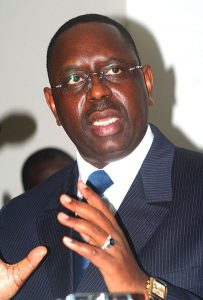
Macky Sall (Photo courtesy of Wikipedia)
Senegal President Macky Sall (Photo courtesy of Wikipedia)

On Friday, April 28, Senegal’s Parliament rejected a series of proposals, including a text that would toughen the criminalization of homosexuality, already punishable by one to five years in prison and a fine (Article 319 of the Penal Code, dating from 1966).

The initiative was supported by the opposition, which denounced “a mechanical majority blockade” after years of advocacy and intense lobbying by religious groups, including “And Samm Jikko” (“Together to Safeguard Values”). Founded by the Islamist [advocacy group] Jamra, the group called for a new law against what it considers “unnatural” acts.

But, as stated by the office of the Assembly, since the acts in question are already banned, this bill, which is “insignificant in reality”, is “inadmissible”. “It brings nothing to the public debate”, and if it had been voted, “it would have no impact”, on the contrary. And it is “neither courageous nor relevant” to do so, given the social situation of the country.

“We don’t need a law based on emotions that fills up our prisons,” insisted a legislator from President Macky Sall’s majority party.

Parliament had already rejected a similar bill in January 2022, which would have doubled the penalties for homosexuality from 5 to 10 years in prison, with a fine of up to 5 million CFA francs (more than 6,600 euros) and without the possibility of exceptions for mitigating circumstances. The text also targeted “lesbianism, bisexuality, transsexuality, intersexuality, zoophilia, necrophilia…” as similar practices.


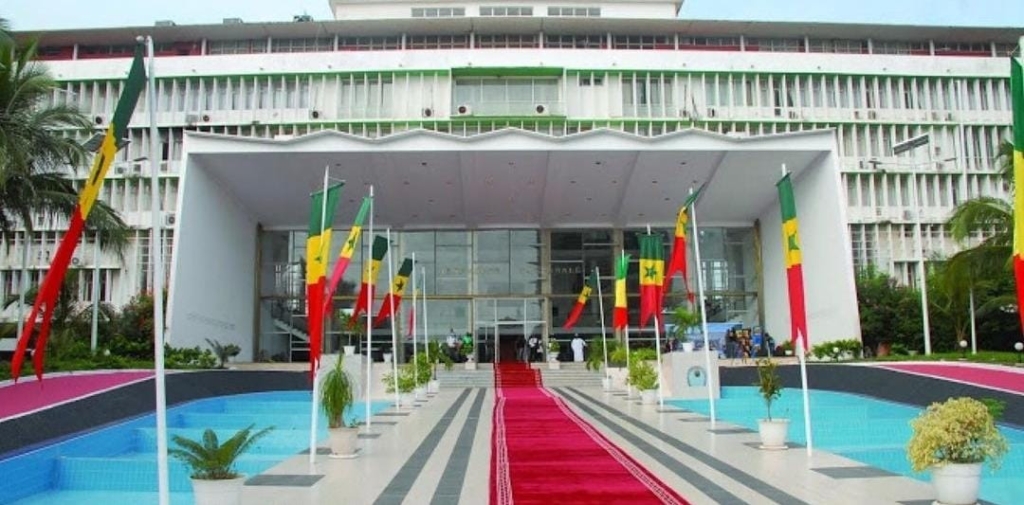
The Parliament Building in Dakar, Senegal  (Photo courtesy of  @aly_ngouille_ndiaye)
Blog, Press

‘LGBTQ+ people would have originated from Africa’, says Davis Mac-Iyalla: ‘We are everywhere’

Written by Sophie Perry. The complete article can be found at https://www.thepinknews.com/2023/04/30/lgbtq-africa-homophobia/

Davis Mac-Iyalla has spent years campaigning for the rights of LGBTQ+ people in Ghana.
(The Kaleidoscope Trust)

In January 2023, LGBTQ+ activist Davis Mac-Iyalla was installed as a chief of the Yamonransa Nkusukum area in central Ghana.

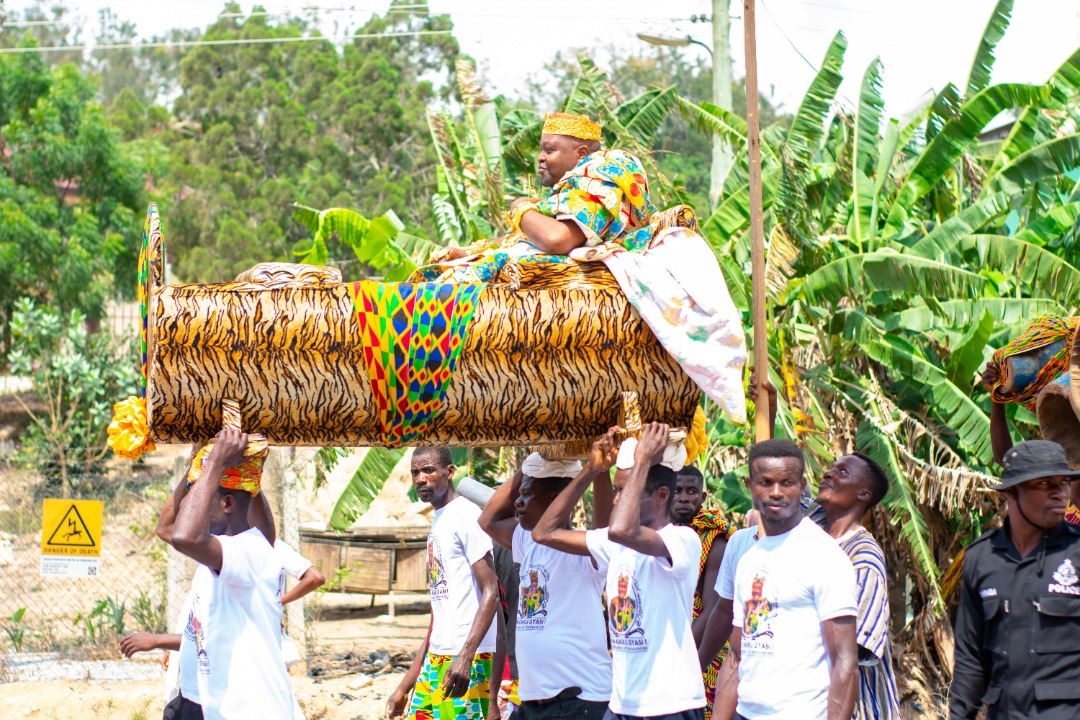
With the title of Amankorehen, the Nigerian-born activist’s role is “like a foreign minister for the traditional area” and a huge honour for him. But during the ceremony he was nearly thrown from his platform in an act he says was “set up” by homophobic figures to “disgrace” him.

As part of the ceremony, Mac-Iyalla was carried through the streets on a platform called a palanquin, and a fall from this to the ground could have killed or seriously injured him.

The local media, who Mac-Iyalla did not invite to the event, managed to “spy” on the incident and published the reactionary headline “Gay rights activist installed as a chief”, knowing it would be a “serious issue”. 

Mac-Iyalla tells PinkNews that reporters framed the near-fall as though he “fell off the palanquin because I am gay”.

Davis Mac-Iyalla has fought for LGBTQ+ rights for years. (Davis Mac-Iyalla)

As a well-respected LGBTQ+ activist, human rights campaigner, faith leader and founder of the Interfaith Diversity Network of West Africa, Mac-Iyalla has spent many years campaigning for the rights of queer people, particularly within the Anglican church. 

His outspoken support for LGBTQ+ rights has seen him fall foul of powerful homophobic figures in the region who – as he puts it  – seek to “discredit” him at every opportunity. 

Speaking during a month-long visit to Britain, Mac-Iyalla explains that “there are some very vocal minorities that keep trying to speak for everyone” in the country and wider West Africa.

But, he says, not “everyone is homophobic” and so “not everyone is against us”.

Homosexuality has been criminalised in Ghana since 1892 when the country was under colonial British rule.

Currently, section 104(1)(a) of the Penal Code (1960), as amended in 2003, prohibits “unnatural carnal knowledge” – defined as “sexual intercourse with a person in an unnatural manner” – of another person of 16 years or over with their consent. It is considered a misdemeanour and carries a maximum penalty of three years imprisonment.

The media suggested Mac-Iyalla’s palanquin fell because he is gay (Davis Mac-Iyalla)

In 2021, a bill to forbid and criminalise “the advocacy and practice of homosexuality” was introduced in the Ghanaian Parliament. 

The legislation would increase jail time for consensual same-sex sexual activity to 10 years and would explicitly ban same-sex marriage. It would also criminalise diverse gender identities and expressions, and prohibit medical practitioners from offering gender-affirming medical care. 

Furthermore, the legislation would offer incentives to families to have their intersex infants “normalised” through genital surgeries and it would prohibit public support, advocacy or organising for LGBTQ+ human rights in the country. 

This bill came amid increased negative public and media focus on queer people, following the raid of an LGBTQ+ centre in Accra and the arrests of 21 human rights activists, who were charged with “unlawful assembly” for attending training on documenting human rights violations against LGBTQ+ people. 

The extremely homophobic bill echoes Uganda’s Anti-Homosexuality Bill, a vile piece of legislation which seeks to criminalise people for simply identifying as LGBTQ+.

However, despite these queerphobic and fear-mongering narratives, Mac-Iyalla says Ghana’s bill did not attract the support politicians thought it would get and so, attention turned to vilifying human rights campaigners like himself. 

“When the bill was introduced, we were frightened that it would just be an easy passage, but no, it was not because we had parents begin to come out and talk about how this bill will be a problem for their families. 

“We then had professional academics begin to come out and speak against this bill from human rights, cultural and traditional rights perspectives.

“That’s something that we didn’t expect because of the way things have happened in the past, so that gave us some hope.” 

Mac-Iyalla points out that the general Ghanaian population is more concerned with issues such as the economy and job security than someone’s sexuality. He says that the bill is being used by prominent religious leaders to push anti-LGBTQ+ sentiment for their own gain. 

“Remember that not everyone likes to engage the media. So the majority voices have an open mind and tolerance, but are just not interested in talking.

“It is a few hateful conservatives that are always in the media trying to speak for everybody or trying to change the narrative. 

“Ghanaians have come to realise that the bill is not for the benefit of Ghana. That bill is only to profit the Christian right-wing conservatives that are pushing it.” 

For Mac-Iyalla, the reception the bill received may also be down to the fact it is “un-Ghanaian and un-African” because it harks back to colonial era rules and perspectives enforced by British imperialism. 

Homosexuality in Africa existed “before the advent of Western missionaries”, Mac-Iyalla says, “so introducing these laws is actually borrowing and confirming colonial ideology and not Ghanaian, African or West African values”.

The impacts of colonialism on Ghana are still being keenly felt by the LGBTQ+ community, and Mac-Iyalla wants the idea that it is “un-African to be LGBTQ+” to be debunked “everywhere”. 

“If, indeed, humans originated from Africa, then LGBTQ+ would have originated from Africa,” he says. 

The activist adds that research has consistently shown that queer people have existed for longer in Africa than people think and – with that being said – “far longer than colonialism”. 

“LGBTQ+ people have been warriors. LGBTQ+ people have been really strong spirituality leaders. LGBTQ+ people have held traditional positions like chiefs and Queen mothers, and that beauty of leadership continues,” he continues.

“LGBTIQ people are proud of African heritage, of African descent. We are proud of who we are. 

“We are not a Western production, as some people want the world to believe. We are everywhere. We are chiefs, we are nurses, we are doctors, we are politicians, we are everything good.”

Blog, Press

South Africa’s Anglican Archbishop Makgoba appeals to Ugandan president to abandon anti-gay hate bill

IDNOWA stands with South Africa’s Anglican Archbishop Makgoba in appealing to Ugandan president to abandon anti-gay hate bill

‘We are all God’s children regardless of the dignity of our sexual differences’ said Anglican Archbishop Thabo Makgoba, in an appeal to Ugandan President Yoweri Museveni, to decline signing into law a bill that makes homosexual acts punishable by death.

Blog, Press

Uganda Anti-Homosexuality bill: Life in prison for saying you’re gay

IDNOWA condemns the Uganda’s Anti-Homosexuality law and request the president of Uganda not to accent to it so that is does not become law? 

BBC news article https://www.bbc.co.uk/news/world-africa-65034343

By Patience Atuhaire

BBC News, Kampala

People who identify as gay in Uganda risk life in prison after parliament passed a new bill to crack down on homosexual activities.

It also includes the death penalty in certain cases.

A rights activist told the BBC the debate around the bill had led to fear of more attacks on gay people.

“There is a lot of blackmail. People are receiving calls that ‘if you don’t give me money, I will report that you are gay,'” they said.

The bill is one of the toughest pieces of anti-gay legislation in Africa.

Homosexual acts are already illegal in Uganda but this bill introduces many new criminal offences.

As well as making merely identifying as gay illegal for the first time, friends, family and members of the community would have a duty to report individuals in same-sex relationships to the authorities.

It was passed with widespread support in Uganda’s parliament on Tuesday evening.

Amnesty International has called the bill, which criminalises same-sex between consenting adults “appalling”, “ambiguous” and “vaguely worded”.

“This deeply repressive legislation will institutionalise discrimination, hatred, and prejudice against LGBTI people – including those who are perceived to be LGBTI – and block the legitimate work of civil society, public health professionals, and community leaders,” said Tigere Chagutah, Amnesty International’s director for East and Southern Africa.

It has also been condemned by both the UK’s Africa Minister Andrew Mitchell and the US Secretary of State Antony Blinken.

The White House has warned Uganda of possible economic repercussions if the new law comes into force.

In the weeks before the debate, anti-homosexual sentiment was prominent in the media, an activist who wanted to remain anonymous told the BBC.

“Members of the queer community have been blackmailed, extorted for money or even lured into traps for mob attacks,” the activist said.

“In some areas even law enforcers are using the current environment to extort money from people who they accuse of being gay. Even some families are reporting their own children to the police.”

The bill will now go to President Yoweri Museveni who can choose to use his veto – and maintain good relations with Western donors and investors – or sign it into law.

He has made several anti-gay comments in recent weeks, and also criticised Western countries for putting pressure on Uganda over the issue.

Another gay rights activist accused the government of using the bill to distract the public from its failures to address some of their pressing economic concerns.

“They are trying to drum up anti-gay rhetoric to divert attention from really what is important to Ugandans in general. There is no reason why you should have a bill that criminalises individuals that are having consensual same-sex adult relationships,” Clare Byarugaba, LGBTQ+ Rights Activist, Chapter Four Uganda told the BBC.

The bill’s backers say they are trying to protect children but Ms Byarugaba said: “Whether you’re heterosexual or homosexual, the government and parliament should introduce laws, or at least implement existing laws that protect all children – boys, girls from defilement. So the issue of recruitment has been unproven, it is baseless, it is biased.””

What does the bill say?

The final version has yet to be officially published but elements discussed in parliament include:

  • A person who is convicted of grooming or trafficking children for purposes of engaging them in homosexual activities faces life in prison
  • Individuals or institutions which support or fund LGBT rights’ activities or organisations, or publish, broadcast and distribute pro-gay media material and literature, also face prosecution and imprisonment
  • Media groups, journalists and publishers face prosecution and imprisonment for publishing, broadcasting, distribution of any content that advocates for gay rights or “promotes homosexuality”
  • Death penalty for what is described as “aggravated homosexuality”, that is sexual abuse of a child, a person with disability or vulnerable people, or in cases where a victim of homosexual assault is infected with a life-long illness
  • Property owners also face risk of being jailed if their premises are used as a “brothel” for homosexual acts or any other sexual minorities rights’ activities

A small group of Ugandan MPs on a committee scrutinising the bill disagreed with its premise. They argue the offences it seeks to criminalise are already covered in the country’s Penal Code Act.

In 2014, Uganda’s constitutional court nullified another act which had toughened laws against the LGBT community.

It included making it illegal to promote and fund LGBT groups and activities, as well as reiterating that homosexual acts should be punished by life imprisonment, and was widely condemned by Western countries.

The court ruled that the legislation be revoked because it had been passed by parliament without the required quorum.

Same-sex relations are banned in about 30 African countries, where many people uphold conservative religious and social values.