
On 7th March 2025 IDNOWA hosted a successful traditional and religious leaders engagement in Cape Coast Ghana. Highlights of the conversation was safety and security for the marginalised community.
On 7th March 2025 IDNOWA hosted a successful traditional and religious leaders engagement in Cape Coast Ghana. Highlights of the conversation was safety and security for the marginalised community.


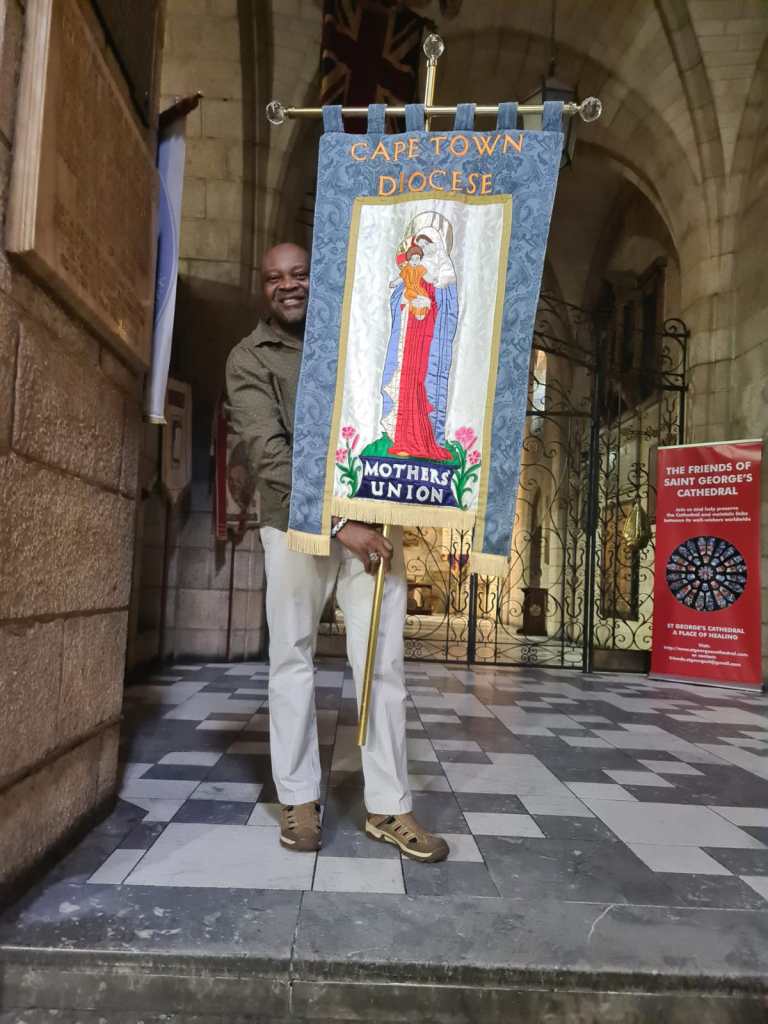
The Executive Director and Members of Interfaith Diversity Network of West Africa (IDNOWA ) participated at the ILGA (the International Lesbian, Gay, Bisexual, Trans and Intersex Association) World Conference 2024 in Cape Town, South Africa.
The ILGA World Conference is the largest global gathering of LGBTIQ changemakers. They have held them since the early days of the organisation in the 1970s.
An ILGA World Conference is a chance to assess where our communities stand, share experiences and best practices, build alliances and partnerships, discuss the future of the movement, and collectively chart ways to advance equality worldwide.
ILGA World Conference is also where the life of the organisation is shaped. ILGA members elect their representatives, advance proposals and constitutional changes, and endorse new organisations to join our family.
ILGA World is queer democracy in action, and it all starts from ILGA World Conferences.

In his closing remarks, Davis Mac-Iyalla, IDNOWA Executive Director, said,
We can’t change the world in one week, but we can try to listen to each other and find strategies to change the negative attitude and discrimination towards us and our community.
We are stronger together in this struggle. Let’s not allow our enemies to divide us and set the ring for us to fight each other while they watch in jubilation.
As an African, my concepts for dialogue are always Ubuntu.”
On their website (ilga.org/) ILGA says,
ILGA World – the International Lesbian, Gay, Bisexual, Trans and Intersex Association – is a worldwide federation of more than 1,900 organisations from over 160 countries and territories campaigning for lesbian, gay, bisexual, trans and intersex human rights.
We want a world where the human rights of all are respected and where everyone can live in equality and freedom: a world where global justice and equity are assured and established regardless of people’s sexual orientations, gender identities, gender expressions and sex characteristics (SOGIESC).
Established in 1978, ILGA World has ECOSOC consultative status at the United Nations.


LGBT people already live in fear in Nigeria, where same-sex relationships are illegal – now widespread misinformation about a European Union partnership pact has whipped up further hostility towards the community.
The Samoa Agreement – signed by Africa’s most-populous nation in June – is a co-operation deal between the EU and 79 countries from Africa, the Caribbean and the Pacific.
The 403-page pact does not mention LGBT rights or same-sex relationships at all – yet many Nigerians believe that by signing it the West African nation has automatically legalised same-sex relationships.
The claims went viral last week when a piece published by Nigeria’s Daily Trust newspaper falsely alleged that the agreement forced underdeveloped and developing countries to recognise LGBT rights as a condition “for getting financial and other supports from advanced societies”.
Even if the agreement referenced such rights, it would still be impossible for the provisions of any international agreement signed by Nigeria to automatically result in changing the law, Nigerian lawyer Ugo Egbujo explained
Under current legislation, adopted a decade ago, same-sex couples face up to 14 years in prison.
“The only way to domesticate a law is to bring it to the National Assembly, where members must deliberate and vote to adopt it. Without doing this, it isn’t a law nor is it justiciable nor enforceable,” Mr Egbujo told the BBC.
“We have clear legislation on same-sex marriage and since its establishment in 2014, it has not been touched. Signing a multilateral agreement will not automatically change that.”
Yes, it says it would never compromise its anti-LGBT laws and that it signed the agreement to boost the country’s economic development.
The Nigerian Bar Association has also scotched rumours that there was a provision in the agreement requiring the country to accept LGBT rights as a pre-condition for a $150bn (£116bn) loan – adding there was no reference to any loans in the deal.
The EU confirmed to the BBC the deal did not include any dedicated funding for Nigeria but there was €150bn ($163bn, £126bn) available to Africa, under a scheme known as Global Gateway, aimed at boosting “smart, clean and secure links in the digital, transport, energy and climate-relevant sectors” and strengthening education.
Despite these clarifications, opposition supporters have weaponised the fake news to attack the government and to whip up anger around the contentious issues of religion, ethnicity and politics.
President Bola Tinubu and Vice-President Kashim Shettima, who are both Muslims, have been accused of betraying their religion.
The false story is trending across social media and has become the leading subject of debate for influencers and political commentators.
Hate speech has increased, according to Bisola Akande, a senior programmes officer for a local LGBT group who requested her name be changed.
“We came under attack with our details posted online. We had to shut down our website and are trying to protect ourselves,” she told the BBC.
Wise, a human rights organisation based in the northern city of Kano, has been the subject of online attacks – forcing it to take down its website and lock its social media pages.
Social media accounts for staff have also been deactivated, protected or made private, one of its representatives told the BBC.
The fury against Wise has been prompted by footage resurfacing of one of its events held a few years ago at which an official belonging to the city’s Hisbah police, a unit which enforces Sharia or Islamic law, speaks in support of LGBT rights.
It has led to the official in question being arrested this week – despite his protestations that his remarks, made during an interview, were intended to be in support of women’s empowerment.
Female Nigerian TikTokers who post pictures of themselves with other women – even if a sister or friend – have also become the target of homophobic abuse with derisive comments condemning their supposed sexual orientation.
It can be traced back to lawyer Sonnie Ekwowusi, who wrote an opinion article in Nigeria’s Vanguard newspaper last November urging the Nigerian government not to sign the Samoa Agreement, calling it “the deceptively and euphemistically crafted LGBT agreement between the EU and ACP [African, Caribbean and Pacific] countries”.
The EU admitted there were concerns about LGBT issues when about 30 countries, mostly African and Caribbean nations, including Nigeria, initially failed to sign the pact last year.
They had wanted to check whether the deal “would be compatible with their legal order, notably as regards same-sex relations and sexual health and rights”, the EU said.
“This move surprised several commentators, as the wording on these topics does not go beyond existing international agreements,” an EU parliament briefing document published in December said.
In fact “as a matter of compromise” it had been agreed that signatories would commit to the implementation of existing international agreements as some African, Caribbean and Pacific (ACP) states had been “reluctant to see the foundation agreement mention sexual orientation and gender identity (LGBTI rights)”, it continued.
The Nigerian government went on to study the wording and agreed – saying in a declaration that it was consistent with Nigeria’s laws and other commitments.

Nigeria’s economic planning minister explained the Samoa Agreement had been signed on 28 June 2024 after being subject to extensive reviews and consultations by the country’s inter-ministerial committee.
No, Mr Ekwowusi reignited the flames of controversy several days later in his article published in the Daily Trust, which said that “certain articles of the agreement, especially articles 2.5 and 29.5, legalise LGBT, ‘transgenderism’, abortion, teen sexual abuse, and perversity in African countries”.
However, the content of these articles does not support this:
In an interview with the BBC, Mr Ekwowusi maintained his allegations.
“Gender equality” was a euphemism used by the EU to encompass sexual and LGBT rights and “reproductive health” was a euphemism for abortion and contraceptives, he said.
He admitted the pact could not override Nigerian legislation, but suggested tighter language was needed.
“We are advocating that they put a definition clause so that we know what the terms are. Define gender, define gender equality, define sexual reproductive health,” Mr Ekwowusi said.
It is a legal framework for relations between the EU, a major provider of development aid, and 79 members of the Organisation of the African, Caribbean and Pacific States (OACPS).
It lays down common principles for around two billion people around the world to address global challenges together.
Respect for human rights, democratic principles and the rule of law constitute an essential element of the agreement, but it also encompasses areas like sustainable economic growth, climate change and migration.
The EU briefing document admitted that in some areas the wording fell short “of the EU negotiators’ ambitions”.
It replaces a previous EU partnership deal – the Cotonou Agreement – adopted in 2000 which aimed to reduce and eventually eradicate poverty.
by Osumanu Al-Hassan first published on MyPublisher24
Speaker of the Ghana Parliament, Rt Hon Alban Sumana Kingsford Bagbin, has reaffirmed his commitment to opposing the legalization of LGBTQ+ activities in Ghana.
He disclosed this at Our Lady Seat of Wisdom Catholic Church in Oyarifa, Accra, during its Patronal Feast Day.
Rt Hon Bagbin declared that he would rather die than support LGBTQ+ rights, which he believes are driven by negative forces and should not be accepted in Ghana.
He criticized European countries for promoting homosexuality in the African continent and urged the Catholic community to disregard media claims that the Pope has endorsed LGBTQ+ activities.
Speaker Bagbin stated that LGBTQ+ rights do not exist anywhere in the world and will not be legalized in Ghana during his tenure.

“Let me say that, as a Catholic, I will not do anything that will end the world and as I always say, I prefer to die fighting against these homosexual activities than to protect their so-called rights,” the Speaker of Parliament said.
The anti-gay bill, which promotes traditional family values, has been passed by Parliament and is awaiting the President’s assent to become law.
Rt Hon Bagbin praised the Catholic Church for its support and contributions to national development, particularly in education, health, and social services.
He highlighted the Church’s role in advocating for social justice and human rights, including efforts to abolish the death penalty and criminalize witchcraft accusations.
“Let me commend the church for taking the principled stand of speaking out against injustice and championing the cause of the marginalized. This important role by the church ensures that the nation moves towards greater equity and inclusion, creating a just society where everyone has the opportunity to succeed.”

“Indeed, it is an open secret that many of the schools, hospitals, and charitable organizations that provide essential services, especially in underserved communities in Ghana have been led by the Church. These institutions do not only address the immediate needs of the people but also empower individuals through education and healthcare, thus contributing to a more informed and healthier populace,” Speaker Bagbin added.
He urged the Church to continue pressing the Executive to pass important legislation, such as the Armed Forces Amendment Act and laws against witchcraft accusations. Bagbin also donated GHS20,000 towards the Church’s new chapel project, emphasizing the importance of promoting ethical and moral values.
In his sermon, Most Rev. John Kobina Louis encouraged church members to seek the intercession of Mary, the Mother of Jesus, for wisdom and endurance.
The Church’s Pastoral Council Chairman, Henry Adjei expressed gratitude to Rt Hon Bagbin and the Auxiliary Bishop for their support.
According to him, the Church started 28 years ago and has a congregation of over 1,500 members, noting that, the new chapel project is estimated to host over 2000 congregations when completed and assured that the Speaker and the Bishop would be invited for commissioning.


by Elsie Prah First published on africanfeminism.com
Africa is a diverse continent with many cultures, norms, languages, and belief systems. Africa is also a continent where LGBTQIA+ (Lesbian, Gay, Bisexual, Transgender, Queer, Intersex, Asexual, and other nonbinary identities) persons experience exceptional human rights violations. Consensual same-sex sexual acts are criminalised in 31 countries, with the death penalty indicated in Mauritania, Nigeria, and Uganda. Incarceration ranges from one-year imprisonment in Liberia to life imprisonment in Sierra Leone, Sudan, Tanzania, Uganda, Zambia, and The Gambia.
Queerness is constantly portrayed as a Western import. This misconception fuels anti-gender sentiments, coupled with cultural and religious biases, denies LGBTQIA+ individuals their right to be themselves and has resulted in systemic and social forms of discrimination and violence against queer persons. Although some progress has been made globally in recent years towards recognising and proclaiming these rights, the struggle for LGBTQIA+ rights in Africa remains an uphill battle with no end in sight.
The acceptance or non-acceptance of sexual and gender diversities in pre-colonial African societies varies. In pre-colonial Africa, queerness was exhibited in various ways, including, but not limited to, identities such as ‘mudoko dako‘ and ‘goor jiggen’, effeminate men in Lango, northern Uganda and Senegal, respectively, who were regarded as women and could marry men in Northern Uganda; ‘inkotshane‘ which was a form of male-male sexual relations in Basotho, southern Africa, and ‘motsoalle‘, which referred to intimate relationships between women in Lesotho.
Colonialism significantly reshaped African societies and imposed Western ideas about sexuality and gender.
Colonial powers imposed their own cultural and religious values. They introduced anti-sodomy laws and moral codes that criminalized same-sex relationships and non-binary gender expressions, which has contributed to the stigmatisation of LGBTQIA+ individuals in the present day.
The British Empire, for example, introduced anti-sodomy laws in many African colonies. These laws criminalised homosexual acts and reflected Victorian-era British values. Other European colonial powers, such as the French and Portuguese, also influenced their respective colonies’ legal and social landscape. These laws and norms continue to exist in some African countries to date.

Cheerful queer persons working. Photo via Shutterstock.
In recent years, Africa has experienced a growing movement to decriminalise queer identities and expressions across the region. This movement has faced setbacks and successes, but it represents a crucial step towards achieving LGBTQIA+ rights and freedoms across the continent.
South Africa is often regarded as a leader in LGBTQIA+ rights in Africa. In 1996, it implemented a new Constitution that included a bill of rights explicitly listing sexual orientation as a protected class. South Africa became the first country in the world to protect individuals from discrimination based on sexual orientation constitutionally. Same-sex marriage has been legal since 2006.
Mozambique revised its penal code in 2014, decriminalising homosexuality. This change was seen as a positive step, albeit limited in its immediate impact due to entrenched social stigma. Seychelles followed suit, where same-sex relationships were decriminalised in 2016. This change in the law was a significant milestone for LGBTQIA+ rights in the country. In January 2019, Angola decriminalised homosexuality by revising its criminal code. This move made Angola one of the first African countries to prohibit discrimination against people based on their sexual orientation. In June 2019, Botswana overturned a colonial-era law criminalising homosexuality, marking a significant turning point in the fight for LGBTQIA+ rights in Africa and inspiring hope in other nations.
Despite these promising developments, many African countries still maintain existing legislation and pass new laws to criminalise homosexuality, often justified on the grounds of tradition, culture, and religion. These laws facilitate the arrest, intimidation, and persecution of LGBTQIA+ people. LGBTQIA+ people also navigate the social stigma regarding their identities, which often results in exclusion and discrimination in several spheres of life, including work, school, and healthcare.
Religious and cultural objections are frequently peddled against LGBTQIA+ rights, which fuel hate crimes and other forms of harassment without consequence.
As LGBTQIA+ organisations continue advocating for rights and inclusion, they face a myriad of challenges that often hinder their progress. They primarily lack technical support, leading to a shortage of human resources, tools, services, and safety plans for staff, which impacts the efficiency of their operations and advocacy efforts. The limited ability to recruit and retain qualified staff further poses significant obstacles to sustained advocacy initiatives.
Organisational limitations also hinder resource mobilisation outside of project calls, restricting LGBTQIA+ organisations’ ability to access necessary funding and support. Insufficient recognition of the contributions of independent activists to the movement’s growth further hinders sustainability. Additionally, LGBTQIA+ activism faces financial challenges with limited access to information on funding opportunities, compounded by language barriers, as most calls are in English. The complex and tedious application processes exacerbate this issue, leading to uneven and competitive funding. Overreliance on one-off foreign grants also threatens financial stability and sustainability, as does the lack of core or multi-year funding, which is crucial for maintaining activities and skilled human resources.
Despite these challenges, LGBTQIA+ organizations continue to persevere, leveraging their resilience and determination to overcome obstacles. Collaborative efforts, strategic partnerships, and advocacy initiatives are crucial to fostering a more inclusive and supportive environment for LGBTQIA+ activism in Africa.

LGBTQIA+ activists around Africa have accomplished great things despite these obstacles. There’s been a rise in thriving LGBTQIA+ groups working on community-building, advocacy, and assistance. Some of these groups are strongholds and change-inducing agents, putting forth an endless effort to combat prejudice and advance equality.
In Kenya, galck+ stands as a beacon of hope, advocating for rights and challenging discriminatory policies. Galck+ has been influential in forming working relationships and alliances with government institutions and civil society organisations, which inspire a society that appreciates diversity and recognises equality for everyone irrespective of their sexual orientation, gender, and expression.
South Africa’s Iranti works to advance LGBTQIA+ rights through research, media campaigning, critical engagement, mobilisation, and reframing perceptions through storytelling. It also raises awareness of LGBTQIA+ issues to reduce stigmatisation and discrimination and shares inspiring tales of resiliency.
The Initiative for Equal Rights – TIERs Nigeria uses research and documentaries to increase awareness and understanding. TIERs promotes equal rights for LGBTQIA+ people through community development, activism, and legal support.
CHEVS West Africa works to advance social justice outcomes and strengthen LGBTQI+ movements across the West African region by transforming power systems, reimagining movement resourcing, enhancing queer visibility and expression, and knowledge and insights generation and management.
The Interfaith Diversity Network of West Africa (IDNOWA) works in 10 West African countries, promoting respect for individuals regardless of faith or sexual orientation. Through dialogue with media, faith-based groups, and communities, IDNOWA bridges religious divides and changes attitudes towards LGBTQI individuals.
In the heart of Botswana, Legabibo embarked on a monumental journey to secure LGBTQI+ peoples’ rights to freedom of association. Through relentless advocacy and legal battles, Legabibo paved the way for a historic court decision that finally recognized the eligibility of LGBTQIA+ groups for registration in Botswana, a significant step forward in the fight for equality and acceptance.
In Uganda, SMUG International stood unwavering in the face of adversity, championing the rights of stigmatised and persecuted minorities. Despite facing threats and navigating legal hurdles, SMUG International, a resilient umbrella coalition, fiercely advocated for LGBTQIA+ rights and played a pivotal role in opposing the notorious “Anti-LGBTQ Bill.”
In Namibia, the Equal Rights Movement has been at the forefront of advancing LGBTQIA+ rights despite facing social barriers. Leveraging community support, advocating for legal reforms, and spearheading awareness initiatives, Equality Namibia has made significant strides in promoting inclusion and equality for all.
Across the continent, Pan Africa ILGA emerged as a formidable force, uniting LGBTQIA+ activists in a common mission to advance rights and foster acceptance. Through collaborative efforts and strategic advocacy, this regional group engaged with legislators to push for legislative reforms to improve LGBTQIA+ rights throughout Africa.
Organizing against all odds, the tenacity and resilience of LGBTQIA+ activists in Africa should be recognised, underscoring the transformative impact of collective action and advocacy. From challenging discrimination to advocating for equal rights and creating supportive communities, these activists continue to inspire hope and drive progress toward a more inclusive and equitable Africa.
Elsie Prah is a dedicated activist, working to build a strong feminist movement and promote solidarity as a member of the human rights organisation at Interfaith Diversity Network of West Africa (IDNOWA). Elsie focuses on LGBTQ+ rights and strives to create a more visible, inclusive and equitable society for marginalised communities. Elsie is passionate about addressing climate change, tech, feminism, gender inequalities and fighting disability injustice.
This story is part of a series in collaboration with the Yemoja Feminista Fellowship by CHEVS, a queer feminist organisation dedicated to advancing social justice and strengthening LGBTQI+ movements across West Africa. The series features insightful analyses, and fervent calls to action from young feminists addressing issues across gender, culture, and human rights in West Africa. The stories offer personal viewpoints on the struggles and victories of feminist activism in the region and the critiques of systemic injustices. The authors prompt us to face uncomfortable realities, question entrenched norms, and imagine a future where all people are free to live authentically and thrive.
Amidst growing complexities, regressive attitudes and laws targeting LGBTQIA+ rights, attacks on sexual and reproductive health rights by anti-gender networks, and the enduring impact of colonial legacies and harmful cultural practices, storytelling remains a vital tool. It challenges stereotypes, centers marginalized and minoritized voices, advocates for healing justice and collective care. In stories we honor the legacy of African feminisms and the tireless work to dismantle intersecting oppressive systems and create a vision of the future grounded in equity, justice, and love. – Rosebell Kagumire, Editor, African Feminism.
 Interfaith Diversity Network of West Africa