Blog, Press

Opinion: LGBTQ+ Erasure Is a Form of Violence — Faith Leaders in Africa Must Not Be Silent

Published on MAMBA Online.com

Queer spiritual leader Nana Davis Mac-Iyalla says faith leaders must confront LGBTQ+ erasure in Africa.

Across West Africa, a dangerous pattern continues to repeat itself: communities that do not fit dominant cultural or religious expectations are pushed into silence. Their stories are ignored, their contributions dismissed, and their humanity questioned. This is not a passive oversight. It is a deliberate act of erasure — and it is one of the most powerful tools used to justify discrimination and harmful legislation.

At the Interfaith Diversity Network of West Africa (IDNOWA), we see the consequences of erasure every day. We work with people whose lives have been shaped by silence imposed on them by family, community, and state. We work with faith leaders who are pressured to deny the existence of sexual and gender minorities within their own congregations. And we work with young people who have never heard a single message affirming that they, too, are created in the image of God.

Why Erasure Happens

Erasure is rooted in fear — fear of diversity, fear of truth, and fear of losing control. When a society pretends that LGBTQ+ people do not exist, it becomes easier to pass laws that harm them. When religious leaders deny the presence of LGBTQ+ members in their congregations, they avoid confronting their own biases. When governments erase entire communities from public discourse, they avoid accountability.

Erasure is not only political. It is spiritual. It tells people that God has no place for them. It weaponizes faith against the very people faith is meant to uplift.

The Impact of Erasure

The consequences are profound and far‑reaching:

  • Psychological harm: People internalize the lie that they are unworthy of love, dignity, or belonging.
  • Historical distortion: Future generations inherit a false narrative that denies the diversity that has always existed in African societies.
  • Social vulnerability: Invisible communities are easier to target with violence, discrimination, and punitive laws.
  • Broken faith communities: When religious spaces exclude, they fail in their moral duty to protect the vulnerable.

At IDNOWA, we believe that erasure is a form of violence — a slow, suffocating violence that destroys lives long before any law is passed.

How We Fight Back

Recognition is not a privilege. It is a right. And IDNOWA’s work is grounded in restoring that right through interfaith solidarity, education, and advocacy.

1. We amplify the stories that others try to silence

Through trainings, dialogues, and public advocacy, we create platforms where LGBTQ+ people of faith can speak for themselves — with dignity and authority.

2. We build interfaith alliances that challenge harmful narratives

Our network brings together Christian, Muslim, and traditional leaders who understand that faith must never be used as a weapon. Together, we challenge the misuse of scripture and cultural rhetoric that fuels discrimination.

3. We document our history and our present

IDNOWA produces research, reports, and community‑based documentation to ensure that our stories are preserved. If we do not write our own history, others will erase it.

4. We train leaders to respond to harmful legislation

Across the region, we equip activists, clergy, and community leaders with the tools to advocate safely and effectively in hostile environments.

5. We create spiritual spaces where everyone is welcome

Our interfaith rituals and pastoral care models affirm that every human being is sacred. No one should be forced to choose between their identity and their faith.

A Call to Action

Erasure thrives in silence. Recognition grows in solidarity.

Faith leaders, policymakers, and community members must choose which side of history they want to stand on. Will we allow fear to dictate who is worthy of dignity? Or will we embrace the truth that diversity is not a threat, but a gift?

At IDNOWA, our answer is clear: We will not allow any human being to be erased. Not in our communities. Not in our faith spaces. Not in our region.

We are here. We have always been here. And we will continue to stand, speak, and advocate until every person — regardless of sexual orientation, gender identity, or faith — is recognized as fully human and fully deserving of love, justice, and belonging.

Davis Mac Iyalla is a queer spiritual leader and openly gay traditional chief in Ghana, with deep roots in faith-based advocacy and interfaith engagement. He is a humxn rights defender committed to advancing dignity, inclusion, and justice for LGBTQI+ communities across Africa. Davis serves as Executive Director of the Interfaith Diversity Network of West Africa (IDNOWA) and is the Africa Coordinator for Africa GNRC (Global Network of Rainbow Catholics). He writes and speaks in his own capacity.

Blog, Press

Heated Rivalry among LGBTQ People in West Africa

By Nana Davis Mac-Iyalla

Introduction

The LGBTQ struggle in West Africa is not only against oppressive laws and hostile societies but also against internal fractures that weaken our collective power. Rivalries within the movement—between organizations, leaders, and even communities—have become a pressing challenge. As someone who has lived, worked, and fought in this space, I believe it is time to confront these divisions head-on. Our liberation cannot be delayed by ego, competition, or mistrust.

The Roots of Division

– Funding Politics: International donors often unintentionally fuel rivalry by favoring certain organizations over others. This creates hierarchies where some groups thrive while grassroots activists are left scrambling for survival.  

– Leadership Ego: Too many leaders see themselves as the “face” of the movement, forgetting that no single person can embody the diversity of LGBTQ lives in West Africa.  

– Strategic Disagreements: Some advocate for bold visibility, others for cautious survival. Both strategies are valid, but when they clash without dialogue, they breed resentment.  

– Colonial Legacies: Language and cultural divides—Anglophone vs. Francophone, Christian vs. Muslim contexts—make regional solidarity harder to sustain.  

The Cost of Rivalry

Every time we fight among ourselves, governments and religious extremists gain ground. Rivalries:  

– Undermine credibility, allowing opponents to dismiss us as fragmented.  

– Drain energy that should be directed toward resisting criminalization and violence.  

– Alienate younger activists, who see infighting instead of inspiration.  

Example of Constructive Work: IDNOWA

The Interfaith Diversity Network of West Africa (IDNOWA) demonstrates how unity and collaboration can counteract rivalry.  

– IDNOWA has consistently advocated against rising anti-LGBTIQ legislation, emphasizing that human rights are universal and must protect all individuals.  

– In Ghana, IDNOWA engaged with the Centre for Religion and Public Life to explore inclusive pastoral care for marginalized people, especially LGBTQ communities. They presented documented evidence of human rights violations to parliamentarians, strengthening the case against the anti-gay bill.  

– By building bridges across faith traditions and national borders, IDNOWA shows that solidarity is possible even in hostile environments. Their work is a reminder that collaboration, not competition, is the path to progress.  

Toward a Movement of Solidarity

We must remember: our enemy is not each other. Our enemy is the system that criminalizes love, denies healthcare, and silences our voices. To move forward:  

– Build Accountability: Leaders must be held accountable to the communities they claim to represent. Transparency in funding and decision-making is non-negotiable.  

– Center the Marginalized: Trans people, lesbians, bisexuals, and grassroots activists must not be sidelined. Their voices are essential to a truly inclusive movement.  

– Regional Networks: We need stronger cross-border alliances to resist divide-and-conquer tactics. West Africa’s LGBTQ struggle is interconnected; Nigeria’s fight is Ghana’s fight, Sierra Leone’s fight, and beyond.  

– Collective Vision: Let us unite around shared goals: decriminalization, healthcare access, protection from violence, and dignity for all.  

Conclusion

The heated rivalries among LGBTQ people in West Africa are real, but they are not insurmountable. They are symptoms of growth, of a movement finding its voice under immense pressure. But if we allow them to fester, they will become obstacles to liberation. Our future depends on solidarity, humility, and courage—not just against external oppression, but against the divisions within.  

Liberation will not come from donors, governments, or charismatic leaders alone. It will come when we, as LGBTQ people in West Africa, choose unity over rivalry, and collective struggle over personal gain.

Blog, Press

PUBLIC STATEMENT

On the Scheduling of the Anti‑LGBTQ+ Bill in the Parliament of Ghana

The Interfaith Diversity Network of West Africa (IDNOWA) notes with deep concern the decision of the Parliament of Ghana to schedule the Anti‑LGBTQ+ Bill for debate and consideration. As an interfaith body committed to human dignity, justice, and peaceful coexistence, we affirm that no law should strip any human being of their safety, freedom of conscience, or right to exist without fear.

Across our region, people of diverse faiths—Christian, Muslim, traditional, and others—share a common moral principle: every human being is created with inherent worth. Criminalizing individuals on the basis of identity or perceived identity violates this shared moral foundation and threatens the social harmony that our faith traditions seek to uphold.

We respectfully urge Ghana’s lawmakers to consider the far‑reaching implications of this bill, including its impact on:

  • Human dignity and fundamental freedoms  
  • Religious liberty, especially for faith communities who reject violence and criminalization  
  • Public health and community safety  
  • Ghana’s longstanding reputation as a leader in democracy and human rights in West Africa

IDNOWA stands firmly against any form of violence, discrimination, or state‑sanctioned harm. We call for dialogue instead of punishment, understanding instead of fear, and compassion instead of criminalization.

We remain committed to working with religious leaders, civil society, and policymakers to promote peace, protect the vulnerable, and uphold the values that strengthen our communities. Our doors remain open for constructive engagement rooted in respect and shared humanity.

Human dignity is not a debate. It is a sacred obligation.

Signed,

Interfaith Diversity Network of West Africa (IDNOWA)

Blog, Press

Becoming Whole: Why Spiritual and Sexual Identity Development Must Be Fought for Together

By Nana Davis Mac‑Iyalla

Across West Africa and throughout the diaspora, I have witnessed a truth that too many institutions still refuse to name: our spiritual lives and our sexual identities do not grow on separate branches. They are intertwined roots of the same human tree. When one is starved, the whole person suffers. When one is nourished, the whole person rises.

For LGBTQ+ people—especially those raised in deeply religious environments—this truth is not theoretical. It is lived in our bodies, our prayers, our silences, and our rebellions. It is lived in the long nights when we try to negotiate with a God we were taught to fear, and in the bright mornings when we finally meet a God who loves us without condition.

The Violence of Forced Fragmentation

Too many of us were taught that to be spiritual, we must amputate our sexuality. That to be faithful, we must lie about who we love. That to be accepted, we must shrink ourselves into theological closets built by other people’s fears.

This fragmentation is not accidental. It is a tool of control.

When a society demands that LGBTQ+ people choose between their faith and their identity, it is not protecting morality. It is protecting power. It is preserving a hierarchy where some bodies are deemed holy and others are treated as theological mistakes.

But we are not mistakes. We are not contradictions. We are not spiritual exiles.

We are whole.

The Courage of Integration

The journey toward integrating spiritual and sexual identity is not easy. It requires unlearning shame that was never ours. It requires confronting religious leaders who weaponize scripture. It requires rebuilding a spiritual home from the ground up—brick by brick, truth by truth.

But integration is also liberation.

It is the moment a lesbian woman in Ghana prays in her own language and realizes God never stopped listening. It is the moment a bisexual man in Nigeria stops apologizing for existing. It is the moment a queer youth in the diaspora discovers that their ancestors walked with spirits long before colonial doctrines arrived.

Integration is not about choosing between God and self. It is about refusing to believe they were ever in conflict.

Why Activism Must Embrace Both

Activism that focuses only on sexual rights but ignores spiritual trauma is incomplete. Activism that celebrates pride but avoids the wounds inflicted by churches, mosques, and temples leaves our people half‑healed.

We must build movements that understand:

  • Sexual identity development is a journey of truth-telling.
  • Spiritual development is a journey of meaning-making.
  • Both are essential to human dignity.

When we create spaces where LGBTQ+ people can explore both without fear, we are not just supporting individuals—we are dismantling systems that depend on our silence.

A Call to Faith Leaders

To my fellow faith leaders across Africa and the diaspora: neutrality is no longer an option. Silence is not compassion. Ambiguity is not pastoral care.

If your theology cannot hold the fullness of LGBTQ+ lives, then it is your theology—not our existence—that needs transformation.

A Call to Our Communities

To my LGBTQ+ siblings: your journey is sacred. Your questions are holy. Your desire to belong—to God, to community, to yourself—is not a weakness but a sign of your spiritual strength.

You do not need to choose between your faith and your identity. You deserve both. You were born for both.

Becoming Whole Is an Act of Resistance

In a world that profits from our fragmentation, wholeness is revolutionary. Every time we claim our sexuality and our spirituality in the same breath, we disrupt centuries of oppression. Every time we refuse to hide, we expand the possibilities for those who will come after us.

This is the work. This is the calling. This is the liberation we are building—one integrated life at a time.

Blog, Press

Spiritual Violence Against LGBTIQ People in West Africa

By Nana Davis Mac‑Iyalla

Our liberation is not a question of if, but when. And together, we are bringing that “when” closer.

Nana Davis Mac‑Iyalla

Blog, Press

Statement: The Power of Visibility in the Fight for Inclusion and LGBT+ Human Rights in West Africa  

Visibility is not a luxury—it is a lifeline. In West Africa, where LGBTQ+ individuals are often forced into silence by religious dogma, cultural stigma, and punitive laws, being seen is an act of resistance. It is also an act of truth. Visibility affirms that queer Africans exist, contribute, lead, and love. It challenges the myth that LGBTQ+ identities are foreign or shameful. It reclaims ancestral wisdom that once honored diversity before colonial doctrines taught us to fear it.  

Today, visibility is more urgent than ever. We are witnessing a troubling rise in religious and traditional homophobia, often weaponized by national parliamentarians who act not as protectors of their people, but as instruments of repression. These lawmakers—some emboldened by Western collaborators who export anti-LGBT+ ideology—are pushing harsh legislation that criminalizes identity, advocacy, and even compassion. Their goal is not morality—it is control. Their method is fear.  

In this climate, the work of the Interfaith Diversity Network of West Africa (IDNOWA) is not only relevant—it is indispensable. IDNOWA stands at the intersection of faith, tradition, and justice. We engage religious and cultural leaders in dialogue, educate communities, and amplify the voices of those who have been silenced. We do not import activism—we reclaim it. Our work is rooted in African values of Ubuntu, dignity, and spiritual resilience.  

IDNOWA’s presence reminds the region—and the world—that inclusion is not a Western agenda. It is a human imperative. It is a return to truth. As anti-LGBT+ forces grow louder, we must grow more visible. We must show that queer Africans are not outsiders—we are part of the continent’s story, its spirit, and its future.

To every LGBTQ+ person in West Africa: your visibility is sacred. Your existence is not a threat—it is a gift. And to those who seek to erase us: we will not disappear. We will organize, educate, and rise. Because visibility is not just about being seen—it is about being free.

Signed, 
Nana Davis Mac-Iyalla 
Executive Director
 Interfaith Diversity Network of West Africa 
(IDNOWA)  

Press

IDNOWA Condemns Burkina Faso’s Anti-Homosexuality Law as a Grave Violation of Human Dignity

PRESS STATEMENT FROM IDNOWA September 2, 2025

IDNOWA Condemns Burkina Faso’s Anti-Homosexuality Law as a Grave Violation of Human Dignity

  IDNOWA stands in unwavering solidarity with LGBTQ+ communities across Africa and strongly denounced the recent passage of a law in Burkina Faso criminalizing homosexuality. This legislation, which imposes prison sentences of two to five years for consensual same-sex relations, is a direct assault on human rights, spiritual dignity, and the principles of justice that should guide any legitimate governance.  

  This law is not only inhumane—it is a dangerous distraction. At a time when citizens are calling for transparency, economic stability, and peace, the government has chosen to scapegoat LGBTQ+ individuals to deflect from its own failures. Such tactics erode public trust and deepen social divisions.  

Davis Mac-Iyalla, Executive Director of IDNOWA, affirms:

“LGBTQ+ people are not outsiders—we are part of Africa’s story, its spirit, and its future. Criminalizing our existence is a betrayal of our shared humanity and a denial of the continent’s rich diversity.”

  We call on the transitional government of Burkina Faso to repeal this unjust law and to redirect its energy toward inclusive governance, protection of civil liberties, and the healing of its nation. True leadership does not come from repression—it comes from courage, compassion, and accountability.  

As an interfaith and ancestral justice network, IDNOWA affirms that every human being carries divine worth. We reject any attempt to criminalize love, identity, or existence. We urge regional and global allies to speak out, to protect those at risk, and to ensure that Africa’s future is not built on fear, but on freedom.

Let it be known: silence is complicity. We will not be silent.

For media inquiries, contact: 

interfaithdiversitynowa@gmail.com

END

Blog, Press

Sitting Tall: Gay Chief Davis Mac Iyalla’s Queer Leadership in the Heart of Ghana

Article by Nompilo GwalaMamba Online.com

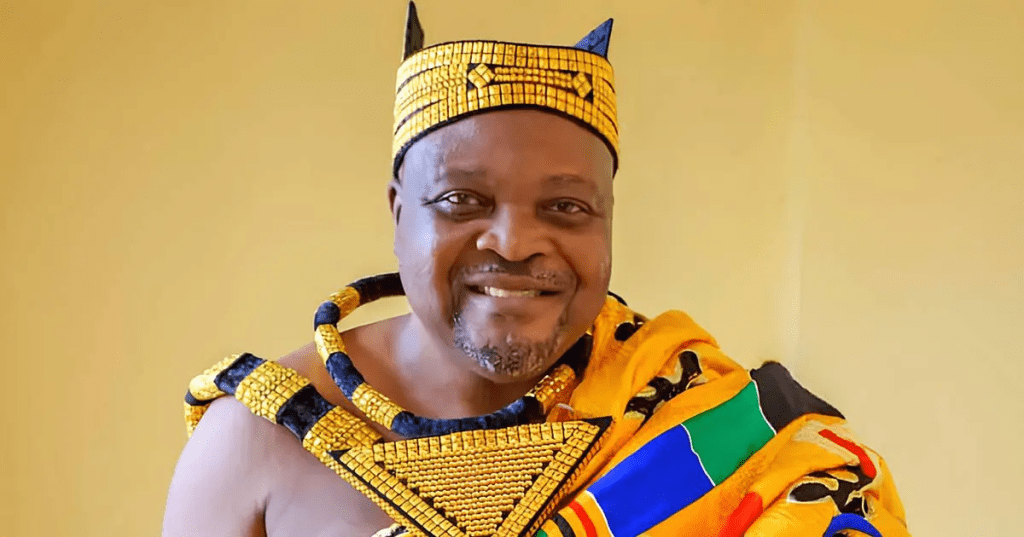
Davis Mac Iyalla, a queer spiritual leader and out gay chief in Ghana, embodies defiant visibility and ancestral wisdom in equal measure

Ghana’s Parliament has reopened debate on one of Africa’s toughest anti LGBTQ+ bills, just a year after the previous version expired without presidential assent.

The reintroduced Human Sexual Rights and Family Values Bill seeks to raise prison terms for same sex intimacy and criminalise “promotion” of queer rights.

Yet even as legislators press ahead, a very different story is unfolding in the fishing town of Yamonransa on the country’s Cape Coast.

There, Nana Kwaku Gyasi, Chief Davis Mac Iyalla, who is also Executive Director of the Interfaith Diversity Network of West Africa (IDNOWA), is teaching that visibility itself can be an act of love.

“I came out the day I was born”

Mac Iyalla rejects western notions of a single, dramatic “coming out.”

“I came out to the world the day I was born,” he tells MambaOnline. “My concept of coming out is about speaking out, using your voice to challenge injustice.”

That conviction first catapulted him into headlines a quarter century ago, when he confronted the Anglican Church of Nigeria over its homophobia.

Today he carries the same fire into Ghanaian life, defiantly testifying before Parliament against the anti-LGBTQ+ bill and preaching inclusion from pulpits across West Africa.

Chosen by the ancestors

Three years ago, Mac Iyalla was lifted onto a traditional palanquin (also known as a litter, used to carry chiefs, kings, and other important figures during ceremonies and festivals) and installed as Amankorehen (development chief) of Yamonransa.

Some rival chiefs tried, literally, to topple him; the palanquin collapsed and tabloids declared that “the gods had rejected” a gay chief.

The activist tells a very different story: “I was chosen by the ancestors,” he says. “If homosexuality were truly a taboo, I would never have been allowed to sit on the stool.” (In Ghanaian chieftaincy, the stool is not just a seat but a central symbol of leadership and authority.)

His stool still stands. So do his community projects: youth apprenticeships, widows’ micro grants and IDNOWA’s dialogue circles that bring imams, pastors and traditional priests to the same table.

Chief Davis Mac Iyalla being carried on a traditional palanquin used during ceremonies and festivals

An out gay chief changing hearts at village level

While urban activists tweet and rally, Mac Iyalla works face to face with local “gate keepers”, chiefs, queen mothers and clan elders whose word shapes daily life.

“Most people don’t care about my sexuality,” he explains. “They care about the development I bring.”

That pragmatism is paying off. Elders who once kept silent now greet him publicly; church women volunteer at IDNOWA food drives; parents ask how to protect queer children rather than punish them.

“Changing attitudes takes time,” the chief says, “but conversations have begun, and that is huge for West Africa.”

Faith without fear

For Mac Iyalla, queer joy is inseparable from spirituality. IDNOWA’s credo is simple: “All humans are born free and equal.”

Founded in 2016, the network spans 11 West African countries, equipping clergy and activists to confront religiously framed homophobia with scripture, history and Ubuntu ethics.

Last September, Mac Iyalla preached in the Netherlands, urging Christians to “reshape the world by speaking out against all forms of injustice.”

A message to queer African youth

“You are not a taboo. You are not ‘un-African’. Same sex love existed on this continent long before colonial missionaries,” Mac Iyalla asserts.

“If God and your ancestors are with you, no weapon fashioned by anti gender movements will succeed.”

He urges young people who feel safe enough to “take the risk and be counted,” while reminding them that leadership also happens quietly, in classrooms, clinics and marketplaces where queer Africans already serve.

Why this story matters

Mac Iyalla’s journey does not erase Ghana’s political peril, but it illuminates a parallel reality: LGBTQ+ Ghanaians are farmers, teachers, chiefs and prayer leaders. They are “everywhere,” as he likes to say, and in many cases they are thriving.

In a season when anti queer rhetoric dominates headlines, Chief Davis Mac Iyalla stands as living proof that African tradition can coexist with and celebrate queer identity. His life invites us to imagine a future in which ancestral stools make room for every kind of child born to the continent.

Until that day arrives, he will keep doing what chiefs are meant to do: build, protect and speak the truth. And that, in itself, is queer joy.

Blog, Press

ILGA World Conference

The Executive Director and Members of Interfaith Diversity Network of West Africa (IDNOWA ) participated at the ILGA (the International Lesbian, Gay, Bisexual, Trans and Intersex Association) World Conference 2024 in Cape Town, South Africa.

The ILGA World Conference is the largest global gathering of LGBTIQ changemakers. They have held them since the early days of the organisation in the 1970s.

An ILGA World Conference is a chance to assess where our communities stand, share experiences and best practices, build alliances and partnerships, discuss the future of the movement, and collectively chart ways to advance equality worldwide.

ILGA World Conference is also where the life of the organisation is shaped. ILGA members elect their representatives, advance proposals and constitutional changes, and endorse new organisations to join our family.

ILGA World is queer democracy in action, and it all starts from ILGA World Conferences.

In his closing remarks, Davis Mac-Iyalla, IDNOWA Executive Director, said,

We can’t change the world in one week, but we can try to listen to each other and find strategies to change the negative attitude and discrimination towards us and our community.
We are stronger together in this struggle. Let’s not allow our enemies to divide us and set the ring for us to fight each other while they watch in jubilation.
As an African, my concepts for dialogue are always Ubuntu.”

About ILGA

On their website (ilga.org/) ILGA says,

ILGA World – the International Lesbian, Gay, Bisexual, Trans and Intersex Association – is a worldwide federation of more than 1,900 organisations from over 160 countries and territories campaigning for lesbian, gay, bisexual, trans and intersex human rights.

We want a world where the human rights of all are respected and where everyone can live in equality and freedom: a world where global justice and equity are assured and established regardless of people’s sexual orientations, gender identities, gender expressions and sex characteristics (SOGIESC).

Established in 1978, ILGA World has ECOSOC consultative status at the United Nations.