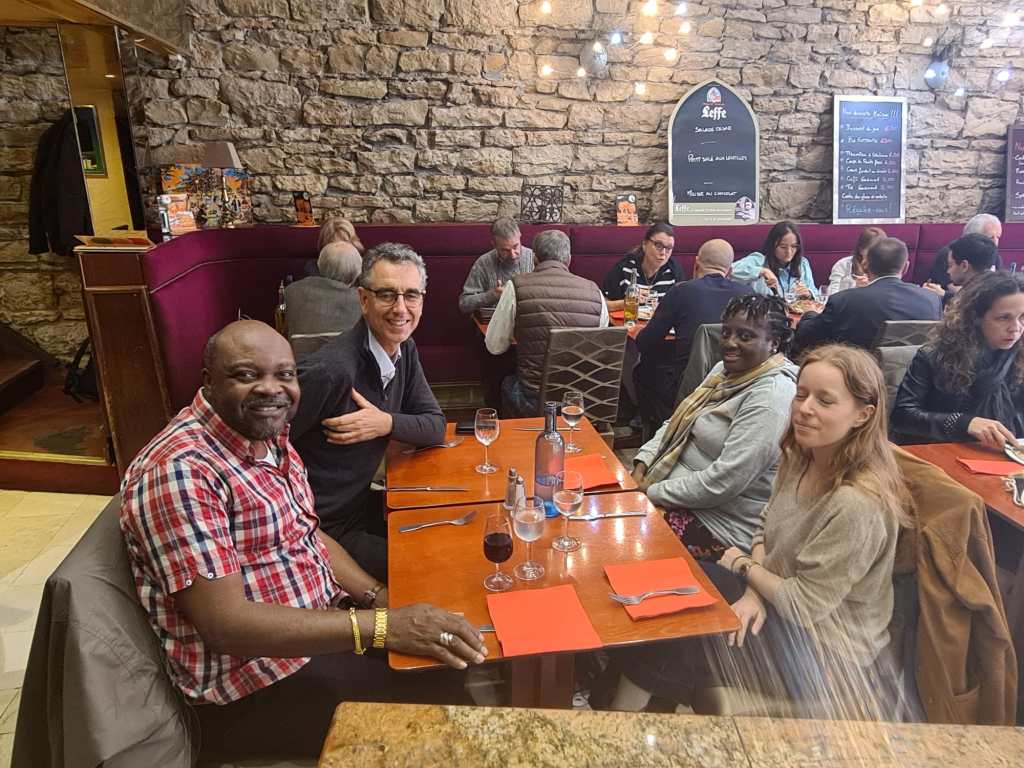
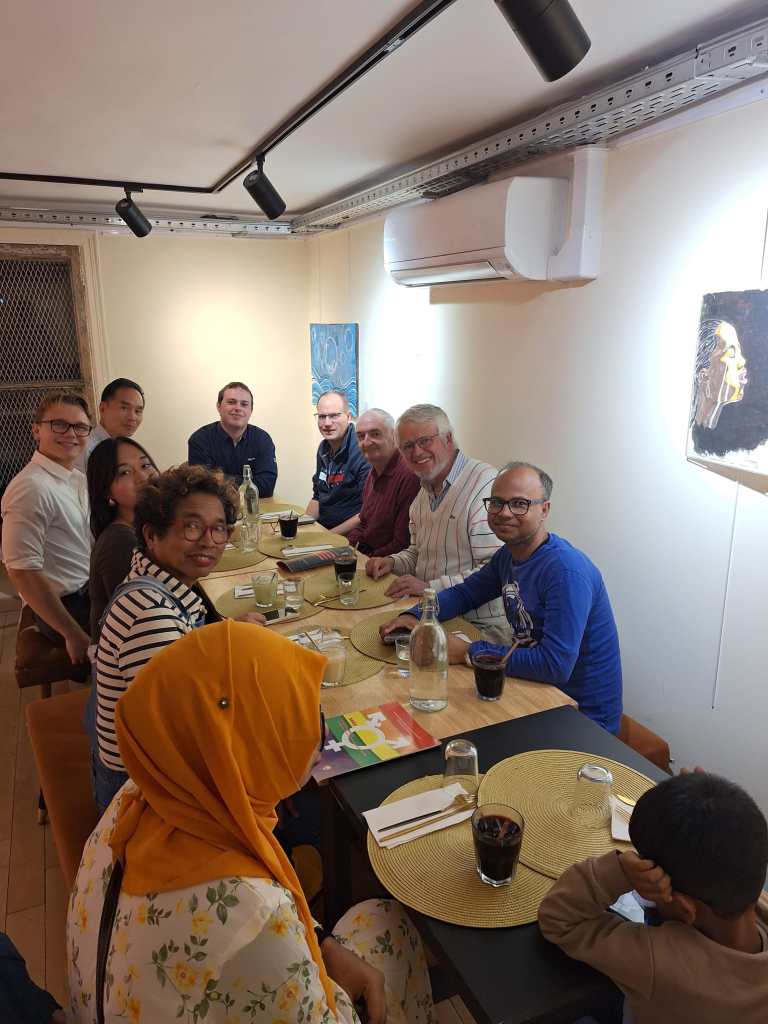
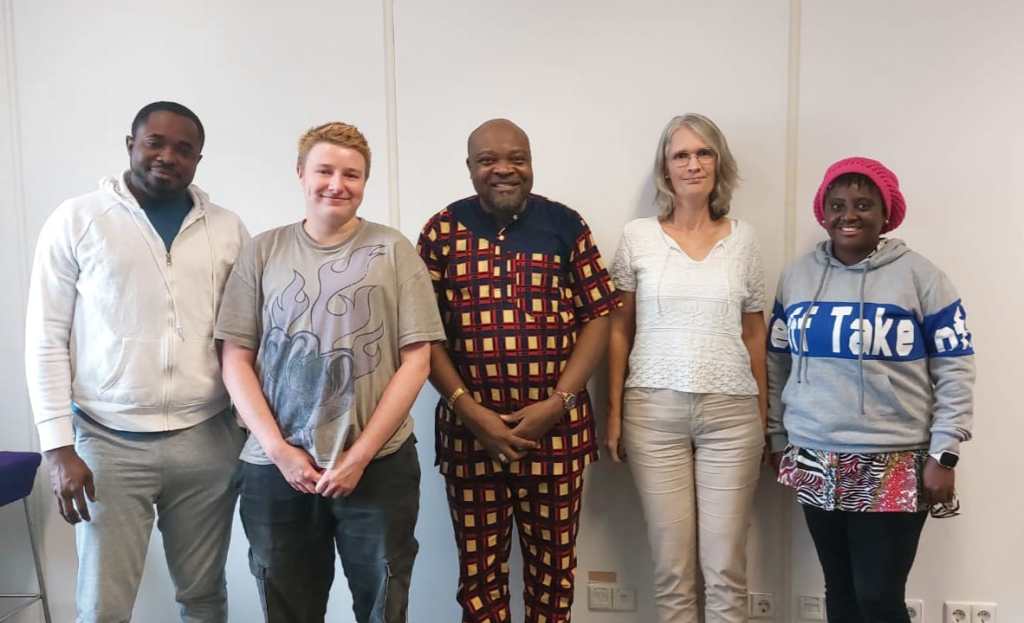
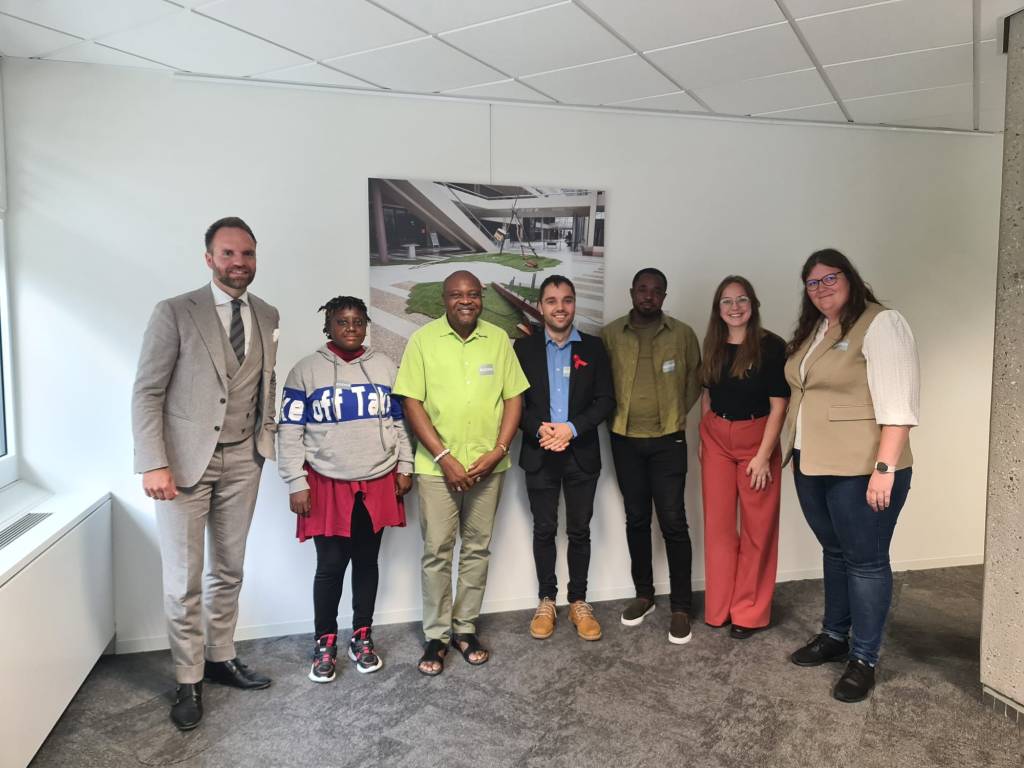
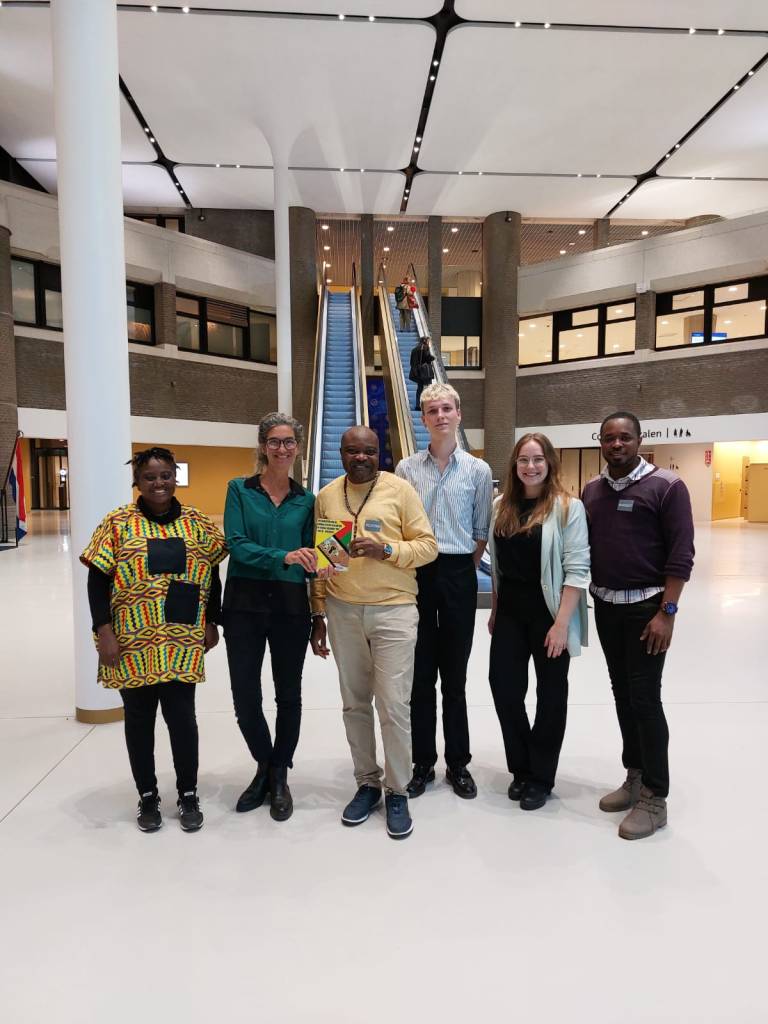
IDNOWA long time partner in France, the Solidarite International LGBTQI (SIL) extended an exchange programme leadership invitation to IDNOWA .
The invitation was honoured by IDNOWA Executive Director, Program Officer and Gender/Youth Officer.
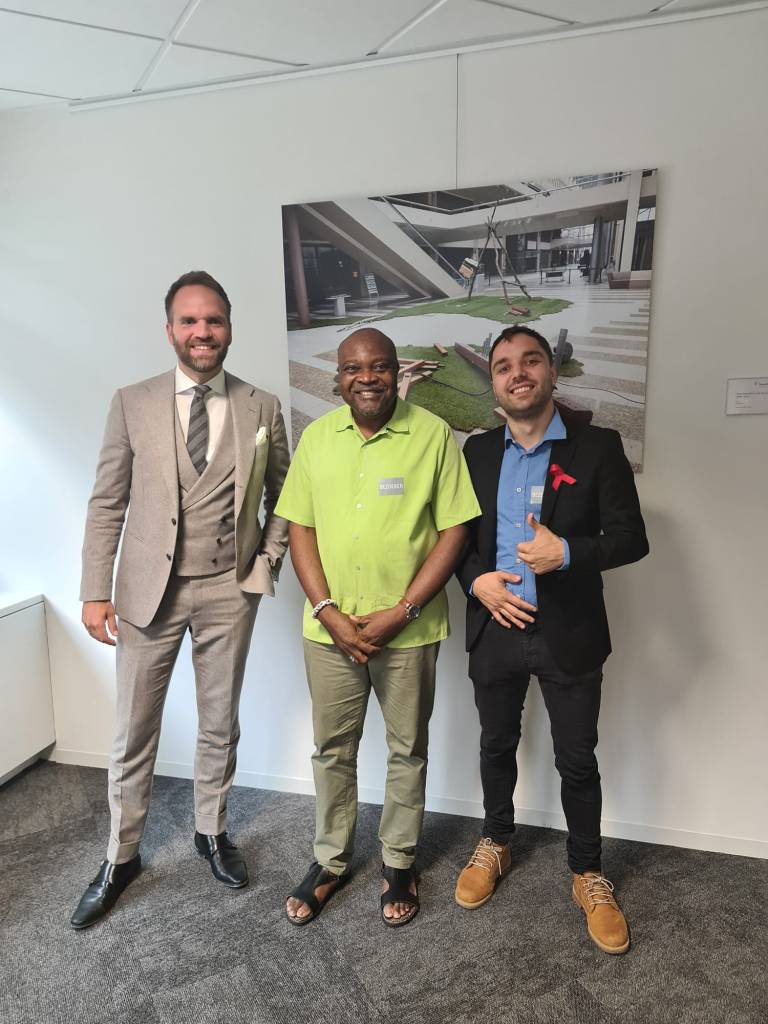
Activities carried out during the visit included meetings with policy makers and non governmental organizations. Private meetings with diplomats from the French and European Foreign Office were also held.
IDNOWA team also met and listened to the concerns of different groups of LGBT+ Asylum seekers in France. Many of them are frustrated and fear been sent back to the very country they are fleeing percussion due to discrimination and stigma against asylum seekers.
Many who spoke to the IDNOWA team are not French speakers who, because of language barrier, don’t know where to go to access information and support.
Kano Cleric Apologises To Bauchi Gov’t Over False Claim On Homosexuality (leadership.ng) A Kano-based Islamic cleric, Sheikh Abdullahi Gadon Kaya has apologised to the Bauchi State government over a misinformation he propagated during one of his recent preaching sessions where he claimed that homosexuals across the country converged in an undisclosed hotel in the state to commit sodomy.
He also alleged that the homosexuals rented the hotel at a whooping sum of N100,000,000 for a 10-day event.
However, renouncing the claim, Gadon Kaya said he was wrongly informed by someone in Bauchi State who called him on phone to inform him about the supposed gathering of homosexuals.
LEADERSHIP reports that the allegation generated uproar in the state, leading to the cleric’s invitation by the Bauchi State Shariah Commission to give evidence of the claim.
Following the invitation by the commission, Gadon Kaya came out in a viral Facebook video monitored by our correspondent on Wednesday, debunking his previous allegations.
According to him, security agents had conducted thorough investigations on the matter but found it to be false.
He begged the Bauchi State government and security agencies for the misinformation, stressing that he was misled by someone whose identity he declined to reveal.
“I apologise to the government of Bauchi State and the security agents; and I want to state that I did not mean to hurt anyone with that misinformation. In the course of preaching, one may say something correctly or incorrectly at times”, he said.
Davis Mac-Iyalla, Executive Director, Interfaith Diversity Network said, “I am glad he has apologies after being found out for speaking dangerous rumours against the LGBT+ community and their allies but I believe he should have gone further to preach tolerance and inclusion. Many LGBT+ Nigerians have been violently attacked and some forced to flee the country as a direct result of fake rumours like this from religious and traditional leaders. fearing for their safety and security.
IDNOWA will continue to work with stakeholders and state actors advocating for the human rights and freedom of LGBT+ people in Nigeria, and West African in general.
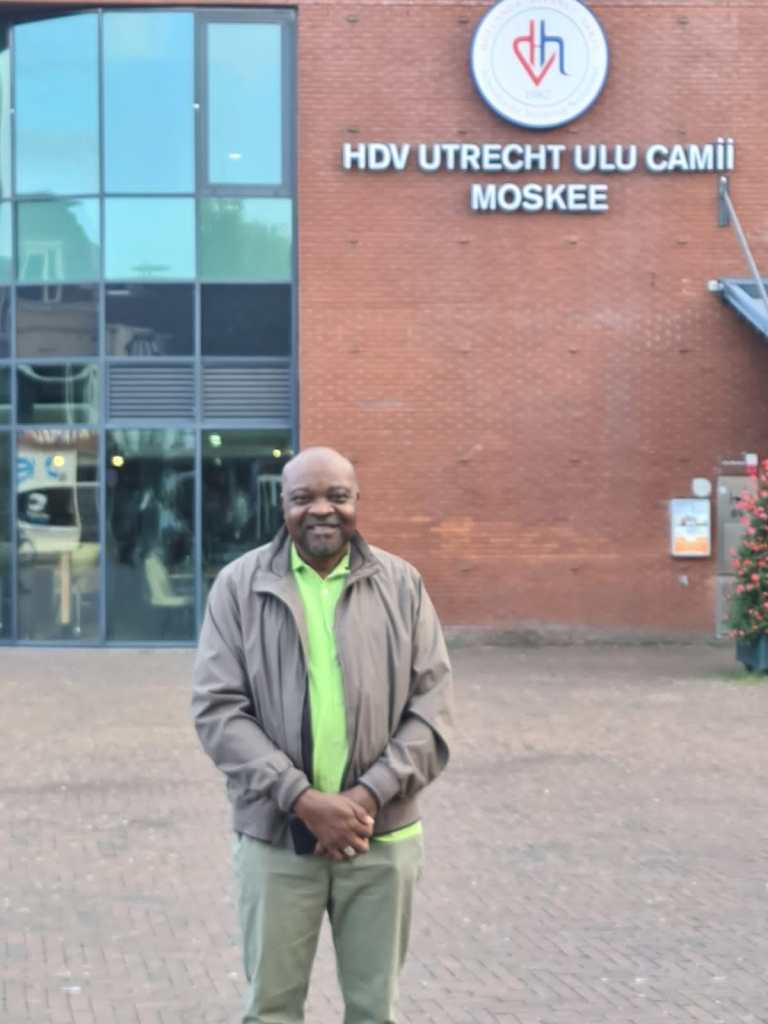
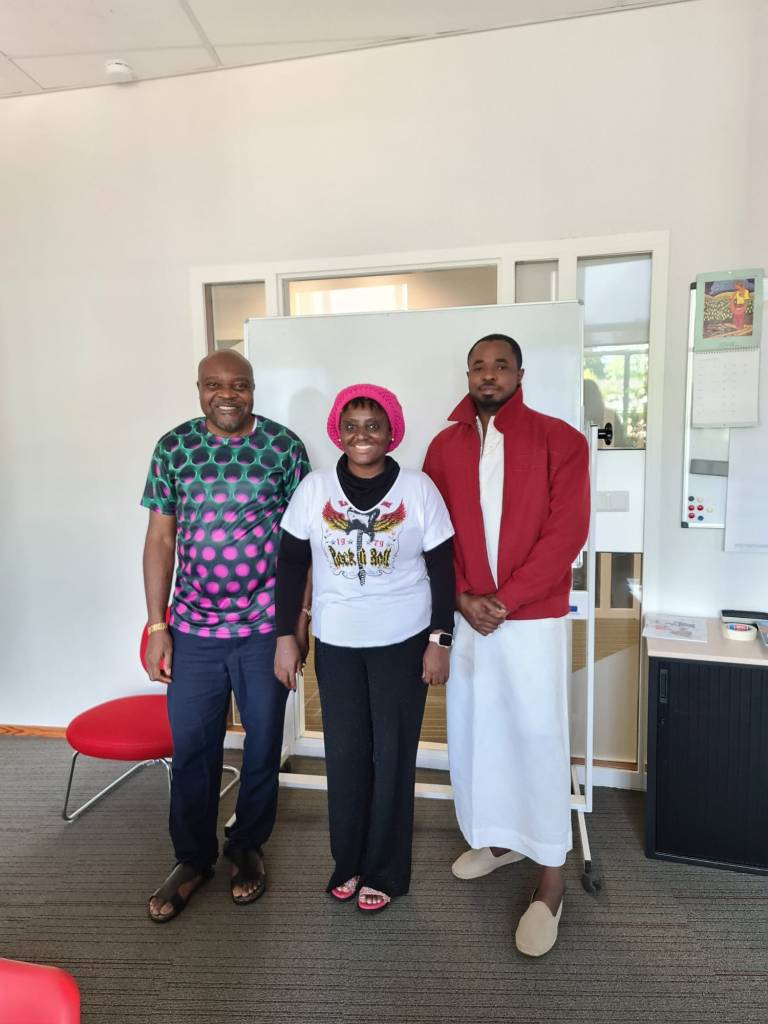
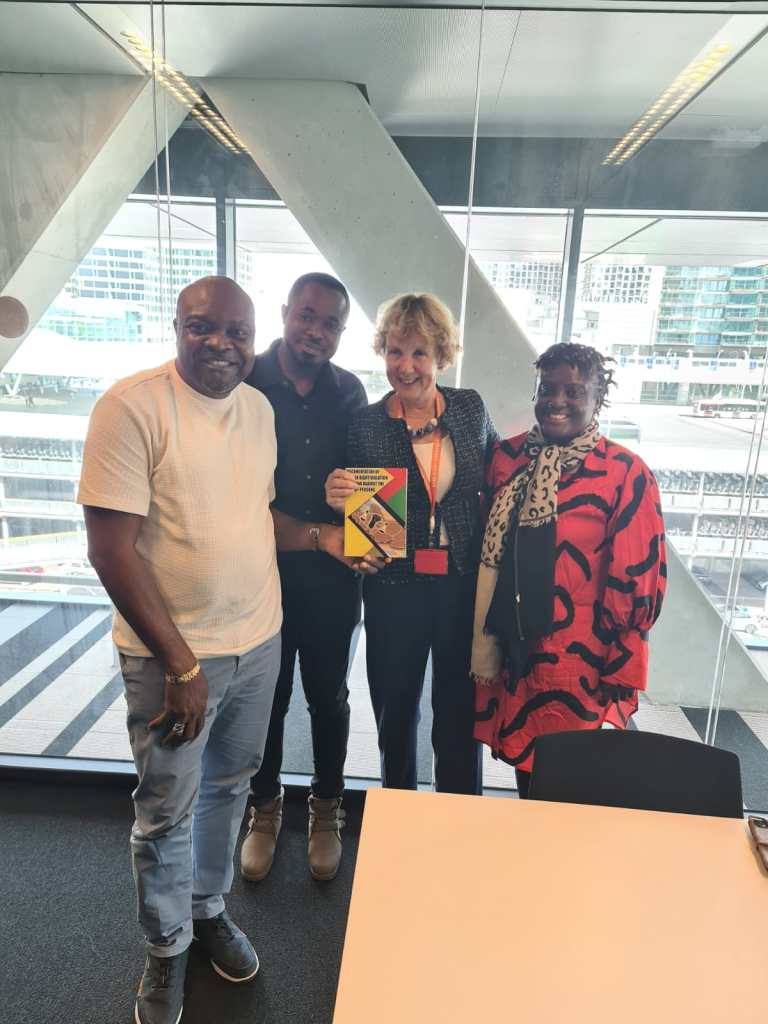
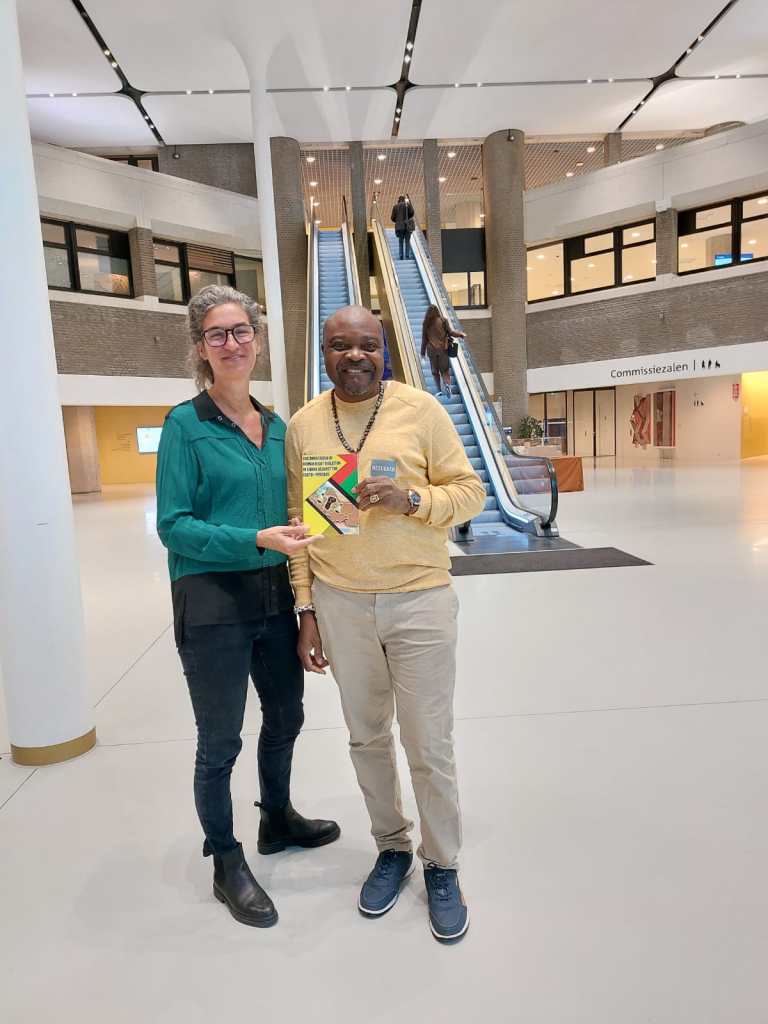
The executive director of IDNOWA and some members were invited by its partners , the Protestant Church in The Netherlands one a week. The purpose of the visit is an exchange program with the aim to meet with different organisations and inform relevant bodies of the Protestant church as well as the general public in the Netherlands about the threatening human rights situation of LGBTIQ people in Ghana, and Nigeria. A second purpose is to improve the partnership between Kerk in Actie and the Interfaith Diversity Network of West Africa (IDNOWA).
During the visits the IDNOWA team met with the religious, parliamentarians and several civil society organizations.
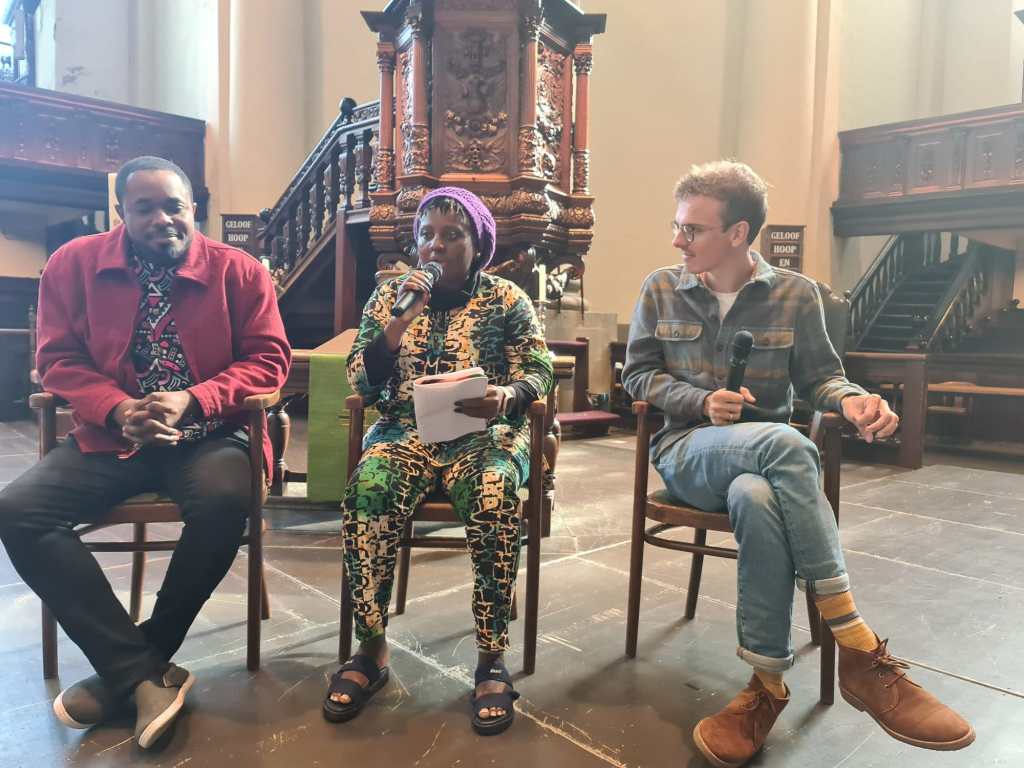
Davis Mac-Iyalla preached an amazing sermon on Sunday 15th September at Nieuwe Kerk, Groningen. He centred his message on Dead Faith and Suffering and encouraged the congregation to use their faith to reshape the world around them by speaking out against all forms of injustice and discrimination.
On Tuesday, August 14, 2024, Rightify Ghana’s Director had the honour of meeting Pope Francis at the Vatican.
With LGBTQI+ criminalisation rising in Africa, and Ghana’s anti-LGBTQI+ bill pending, we shared our experiences as queer individuals in Ghana and expressed gratitude to the Pope for his progressive stance, especially his opposition to violence and discrimination.
Pope Francis encouraged us to “keep fighting for your rights,” and that’s exactly what we will do.
We’re also grateful for the meaningful gifts we received—they will always hold a special place for us.
On Tuesday, August 14, 2024, Rightify Ghana's Director @Ebenezer_Peegah had the honour of meeting Pope Francis @Pontifex at the Vatican.
With LGBTQI+ criminalisation rising in Africa, and Ghana's anti-LGBTQI+ bill pending, we shared our experiences as queer individuals in.. pic.twitter.com/tYfW1X4W6D
LGBT people already live in fear in Nigeria, where same-sex relationships are illegal – now widespread misinformation about a European Union partnership pact has whipped up further hostility towards the community.
The Samoa Agreement – signed by Africa’s most-populous nation in June – is a co-operation deal between the EU and 79 countries from Africa, the Caribbean and the Pacific.
The 403-page pact does not mention LGBT rights or same-sex relationships at all – yet many Nigerians believe that by signing it the West African nation has automatically legalised same-sex relationships.
The claims went viral last week when a piece published by Nigeria’s Daily Trust newspaper falsely alleged that the agreement forced underdeveloped and developing countries to recognise LGBT rights as a condition “for getting financial and other supports from advanced societies”.
Even if the agreement referenced such rights, it would still be impossible for the provisions of any international agreement signed by Nigeria to automatically result in changing the law, Nigerian lawyer Ugo Egbujo explained
Under current legislation, adopted a decade ago, same-sex couples face up to 14 years in prison.
“The only way to domesticate a law is to bring it to the National Assembly, where members must deliberate and vote to adopt it. Without doing this, it isn’t a law nor is it justiciable nor enforceable,” Mr Egbujo told the BBC.
“We have clear legislation on same-sex marriage and since its establishment in 2014, it has not been touched. Signing a multilateral agreement will not automatically change that.”
Has the government reacted?
Yes, it says it would never compromise its anti-LGBT laws and that it signed the agreement to boost the country’s economic development.
The Nigerian Bar Association has also scotched rumours that there was a provision in the agreement requiring the country to accept LGBT rights as a pre-condition for a $150bn (£116bn) loan – adding there was no reference to any loans in the deal.
The EU confirmed to the BBC the deal did not include any dedicated funding for Nigeria but there was €150bn ($163bn, £126bn) available to Africa, under a scheme known as Global Gateway, aimed at boosting “smart, clean and secure links in the digital, transport, energy and climate-relevant sectors” and strengthening education.
Despite these clarifications, opposition supporters have weaponised the fake news to attack the government and to whip up anger around the contentious issues of religion, ethnicity and politics.
President Bola Tinubu and Vice-President Kashim Shettima, who are both Muslims, have been accused of betraying their religion.
The false story is trending across social media and has become the leading subject of debate for influencers and political commentators.
How has the LGBT community been affected?
Hate speech has increased, according to Bisola Akande, a senior programmes officer for a local LGBT group who requested her name be changed.
“We came under attack with our details posted online. We had to shut down our website and are trying to protect ourselves,” she told the BBC.
Wise, a human rights organisation based in the northern city of Kano, has been the subject of online attacks – forcing it to take down its website and lock its social media pages.
Social media accounts for staff have also been deactivated, protected or made private, one of its representatives told the BBC.
The fury against Wise has been prompted by footage resurfacing of one of its events held a few years ago at which an official belonging to the city’s Hisbah police, a unit which enforces Sharia or Islamic law, speaks in support of LGBT rights.
It has led to the official in question being arrested this week – despite his protestations that his remarks, made during an interview, were intended to be in support of women’s empowerment.
Female Nigerian TikTokers who post pictures of themselves with other women – even if a sister or friend – have also become the target of homophobic abuse with derisive comments condemning their supposed sexual orientation.
When were concerns about the deal first raised?
It can be traced back to lawyer Sonnie Ekwowusi, who wrote an opinion article in Nigeria’s Vanguard newspaper last November urging the Nigerian government not to sign the Samoa Agreement, calling it “the deceptively and euphemistically crafted LGBT agreement between the EU and ACP [African, Caribbean and Pacific] countries”.
The EU admitted there were concerns about LGBT issues when about 30 countries, mostly African and Caribbean nations, including Nigeria, initially failed to sign the pact last year.
They had wanted to check whether the deal “would be compatible with their legal order, notably as regards same-sex relations and sexual health and rights”, the EU said.
In fact “as a matter of compromise” it had been agreed that signatories would commit to the implementation of existing international agreements as some African, Caribbean and Pacific (ACP) states had been “reluctant to see the foundation agreement mention sexual orientation and gender identity (LGBTI rights)”, it continued.
The Nigerian government went on to study the wording and agreed – saying in a declaration that it was consistent with Nigeria’s laws and other commitments.
Image caption,Nigeria’s ambassador to Belgium – Obinna Chiedu Onowu – signed the Samoa Agreement at the OACPS Secretariat in Brussels
Nigeria’s economic planning minister explained the Samoa Agreement had been signed on 28 June 2024 after being subject to extensive reviews and consultations by the country’s inter-ministerial committee.
Did this satisfy the critics?
No, Mr Ekwowusi reignited the flames of controversy several days later in his article published in the Daily Trust, which said that “certain articles of the agreement, especially articles 2.5 and 29.5, legalise LGBT, ‘transgenderism’, abortion, teen sexual abuse, and perversity in African countries”.
However, the content of these articles does not support this:
Article 2.5 reads: “The Parties shall systematically promote a gender perspective and ensure that gender equality is mainstreamed across all policies.”
Article 29.5 reads: “The Parties shall support universal access to sexual and reproductive health commodities and healthcare services, including for family planning, information and education, and the integration of reproductive health into national strategies and programmes.”
In an interview with the BBC, Mr Ekwowusi maintained his allegations.
“Gender equality” was a euphemism used by the EU to encompass sexual and LGBT rights and “reproductive health” was a euphemism for abortion and contraceptives, he said.
He admitted the pact could not override Nigerian legislation, but suggested tighter language was needed.
“We are advocating that they put a definition clause so that we know what the terms are. Define gender, define gender equality, define sexual reproductive health,” Mr Ekwowusi said.
What is the Samoa Agreement?
It is a legal framework for relations between the EU, a major provider of development aid, and 79 members of the Organisation of the African, Caribbean and Pacific States (OACPS).
Respect for human rights, democratic principles and the rule of law constitute an essential element of the agreement, but it also encompasses areas like sustainable economic growth, climate change and migration.
The EU briefing document admitted that in some areas the wording fell short “of the EU negotiators’ ambitions”.
It replaces a previous EU partnership deal – the Cotonou Agreement – adopted in 2000 which aimed to reduce and eventually eradicate poverty.
IDNOWA members in Burkina Fasco are experiencing discrimination and hostility not only from service providers but also from family members and religious and traditional leaders.
Capt Ibrahim Traoré’s regime is spearheading an overhaul of marriage laws
Burkina Faso’s military junta has announced a ban on homosexual acts, making it the latest African state to crack down on same-sex relations despite strong opposition from Western powers.
Homosexuality was frowned upon in the socially conservative West African state, but it was never outlawed.
Justice Minister Edasso Rodrigue Bayala said the junta’s cabinet had now approved legislation to make it a punishable offence, but he did not give further details.
The military seized power in Burkina Faso in 2022, and has pivoted towards Russia after drastically reducing ties with former colonial power, France.
Homosexual acts were decriminalised in Russia in 1993, but President Vladimir Putin’s government has been cracking down on the LGBTQ community, including banning what it calls “propaganda of non-traditional sexual relations”.
The doctor forced to fight jihadists in Burkina Faso
Nigeria-EU deal sparks false claims over LGBT rights
The Nigerian queer parties that offer liberation
Burkina Faso’s decision to outlaw homosexual relations is part of an overhaul of its marriage laws.
The new legislation, which still needs to be passed by the military-controlled parliament and signed off by junta leader Ibrahim Traoré, only recognises religious and customary marriages.
“Henceforth homosexuality and associated practices will be punished by the law,” the justice minister was quoted by AFP news agency as saying.
Capt Traoré took power in September 2022 after overthrowing another military ruler, Lt Col Paul-Henri Damiba, accusing him of failing to quell an Islamist insurgency that has gripped Burkina Faso since 2015.
Burkina Faso was among 22 out of 54 African states where same-sex relations were not criminalised.
Unlike in many former British colonies, it did not inherit anti-homosexuality laws after independence from France in 1960.
Muslims make up around 64% of Burkina Faso’s population and Christians 26%. The remaining 10% of people follow traditional religions or have no faith.
Many African states have been taking a tougher stand against the LGBTQ community in recent years.
Uganda is among those that have adopted legislation recently to further crack down on the community, despite strong condemnation from local rights groups and Western powers.
In May, its Constitutional Court upheld a tough new anti-gay law that allows for the death penalty to be imposed for “aggravated homosexuality”, which includes having gay sex with someone below the age of 18 or where someone is infected with a life-long illness such as HIV.
Activists said they would appeal against the ruling.
The World Bank has halted new loans to President Yoweri Museveni’s government while the US has stopped giving Ugandan goods preferential access to its markets, following the adoption of the legislation last year.
Mr Museveni defended the legislation as preserving traditional family values, and said Uganda would not allow the West to dictate to it.
The daughter of Cameroon’s president drew mixed reaction after she came out as a lesbian last week.
Brenda Biya, who lives abroad, said she hoped that her coming out would help change the law banning same-sex relations in the country.
Cameroon has been ruled with an iron-hand by her 91-year-old father, Paul Biya, since 1982.
In Ghana, parliament passed a tough new bill in February that imposes a prison sentence of up to three years for anyone convicted of identifying as LGBTQ+.
However, President Nana Akufo-Addo has not signed it into law, saying he will wait for the courts to rule on its constitutionality.
The finance ministry has warned him that if the bill became law, Ghana could lose $3.8bn (£3bn) in World Bank funding over the next five to six years.
Ghana is suffering a major economic crisis and received a bailout from the International Monetary Fund (IMF) last year.
More religious and faith-based leaders continue to add their voices to the call for further discussions on the much-talked about Human Sexual Rights and Family Values Bill, also called the anti-gay Bill.
The Bill, which was passed by Parliament in February this year, is yet to receive presidential assent due to some legal tussles around it.
Some of the religious leaders believe that the Bill, as it stands now, appears to be politically motivated and that the personal interests of those behind it have overshadowed the national interest.
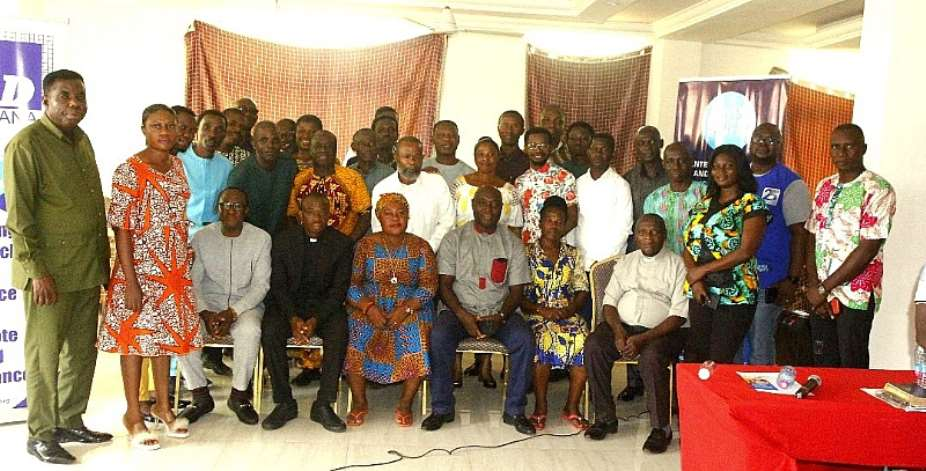
This came to light in Techiman in the Bono East Region during a social dialogue with religious and faith-based leaders on human rights and rights-based approach to protecting and respecting the rights of sexual minorities in Ghana.
It was organised by the Ghana Centre for Democratic Development (CDD-Ghana), an independent, not-for-profit research and advocacy think tank working to advance democracy, good governance and inclusive economic growth, in collaboration with the Centre for Religion and Public Life (CRPL-Ghana), a civil society group.
CDD-Ghana works to complement the broader objectives of strengthening democratic governance, the principles of popular participation and the demand for public accountability while CRPL[1]Ghana seeks to balance religion and spirituality in public life through research, education, lobbying and advocacy.
It became obvious during the dialogue session that a sizeable number of the populace has neither read nor been taken through the bill but are emotionally in support of it primarily based on their religious and cultural inclinations and what they have heard through the media.
Broader consultations
“There should have been a broader consultation for inputs from various interest groups because the Bill in its current state violates the fundamental human rights of some people. Even though we don’t accept LGBTQI+ but it’s too harsh to my liking and it must be reconsidered. Some aspects of Bill must not be allowed to remain and so I suggest that Parliament should float the process again for further discussions before it is laid on the floor again,” said Rev. Robert Boadi, the head pastor of the Techiman branch of the Evangelical Church of Ghana in an interview on the sidelines of the dialogue.
For his part, Rev. Augustine Agyapong Bae of the Trinity Congregation of the Presbyterian Church of Ghana, Techiman, wondered why the seeming pressure to pass the Human Sexual Rights and Family Values Bill today when Ghana’s current criminal code and other legal frameworks under the 1992 Constitution adequately deal with all the issues raised in the bill.
“I thought there were no laws in our statutes that deal with some of these things, but I have come to realise that there are laws that can adequately deal with anyone who engages in gay or lesbianism. We’re not saying nobody can make laws in the country, but it should be devoid of politics and emotions so that we don’t regret our actions in future,” he again said.
For his part, Rev. William Appiah Kubi, the head pastor of the Faith Baptist Church in Techiman, said the dialogue session had enlightened him and his colleagues on the Bill.
He noted that the proponents of the Bill appeared to have rushed the process leading to its passage without adequate consultations, adding that there are several provisions of the Bill that should either be revised or taken out completely because of their tendency to infringe upon other people’s fundamental human rights.
He said: “There will be a lot of chaos if this Bill is allowed to come into effect, so I think we need to broaden the discussion further for people to be adequately informed about the various provisions of it.”
Most participants also expressed similar concerns during separate interviews.
Dr. Michael Augustus Akagbor, Senior Programmes Officer of CDD-Ghana, was happy about the outcome of the dialogue, and gave the assurance that more of such engagements would be organised, going forward.
Misconceptions
“Usually, people come for such a programme with their preconceived perceptions, but through engagements we realised that a lot of the participants have not even read the Bill, and that’s the danger of language. These are people of authority, and once they say something people consider it to be true. So, it’s good that we’ve been able to engage with them,” he stated.
He said CDD-Ghana would continue to engage with various stakeholder groups on the issue, adding that “the more people understand this Bill, the more they come to the realization that it is not good for our country.”
The Executive Director of the CRPL-Ghana, Rev. Dr. Confidence Bansah, reminded religious leaders to mindful of the teachings of Jesus Christ, which are mainly centred on peace, love and reconciliation. He said Christians are the salt and the light of the world and must therefore act in a way that would ensure that people live in unity and in harmony devoid of any discrimination.
John, a priest ordained in a mainstream church, remembers struggling all his life to reconcile his sexual orientation with his calling to be a church minister.
Facing homophobia after being outed in church, he started searching for queer affirming theology and spaces within Christian communities.
He shares his story on how finding a queer-affirming church in Kenya changed his life and his calling to priesthood.
Speaker of the Ghana Parliament, Rt Hon Alban Sumana Kingsford Bagbin, has reaffirmed his commitment to opposing the legalization of LGBTQ+ activities in Ghana.
He disclosed this at Our Lady Seat of Wisdom Catholic Church in Oyarifa, Accra, during its Patronal Feast Day.
Rt Hon Bagbin declared that he would rather die than support LGBTQ+ rights, which he believes are driven by negative forces and should not be accepted in Ghana.
He criticized European countries for promoting homosexuality in the African continent and urged the Catholic community to disregard media claims that the Pope has endorsed LGBTQ+ activities.
Speaker Bagbin stated that LGBTQ+ rights do not exist anywhere in the world and will not be legalized in Ghana during his tenure.
“Let me say that, as a Catholic, I will not do anything that will end the world and as I always say, I prefer to die fighting against these homosexual activities than to protect their so-called rights,” the Speaker of Parliament said.
The anti-gay bill, which promotes traditional family values, has been passed by Parliament and is awaiting the President’s assent to become law.
Rt Hon Bagbin praised the Catholic Church for its support and contributions to national development, particularly in education, health, and social services.
He highlighted the Church’s role in advocating for social justice and human rights, including efforts to abolish the death penalty and criminalize witchcraft accusations.
“Let me commend the church for taking the principled stand of speaking out against injustice and championing the cause of the marginalized. This important role by the church ensures that the nation moves towards greater equity and inclusion, creating a just society where everyone has the opportunity to succeed.”
“Indeed, it is an open secret that many of the schools, hospitals, and charitable organizations that provide essential services, especially in underserved communities in Ghana have been led by the Church. These institutions do not only address the immediate needs of the people but also empower individuals through education and healthcare, thus contributing to a more informed and healthier populace,” Speaker Bagbin added.
He urged the Church to continue pressing the Executive to pass important legislation, such as the Armed Forces Amendment Act and laws against witchcraft accusations. Bagbin also donated GHS20,000 towards the Church’s new chapel project, emphasizing the importance of promoting ethical and moral values.
In his sermon, Most Rev. John Kobina Louis encouraged church members to seek the intercession of Mary, the Mother of Jesus, for wisdom and endurance.
The Church’s Pastoral Council Chairman, Henry Adjei expressed gratitude to Rt Hon Bagbin and the Auxiliary Bishop for their support.
According to him, the Church started 28 years ago and has a congregation of over 1,500 members, noting that, the new chapel project is estimated to host over 2000 congregations when completed and assured that the Speaker and the Bishop would be invited for commissioning.
The subject of gay rights came up at a student forum attended by French politician Jean-Luc Mélenchon (L) and Senegal’s Prime Minister Ousmane Sonko (R) (c)AFP
A Senegalese court has jailed two men for “spreading false news” after they accused Ousmane Sonko, the country’s new prime minister, of tolerating homosexuality.
Activist Bah Diakhate and Imam Cheikh Ahmed Tidiane Ndao were jailed for three months and fined 100,000 CFA francs ($165, £130) each.
They had been angered that Mr Sonko had allowed a visiting French politician to express his support for same-sex marriages.
Homosexual acts are banned in the mainly Muslim West African country and are punishable by up to five years in prison.
The political activist and the preacher were arrested two weeks ago after posting a video attacking Mr Sonko for giving a platform to Jean-Luc Mélenchon, a far-left French politician.
Mr Mélenchon gave his opinion about same-sex marriages at a student forum in the capital, Dakar, in mid-May.
His comments reportedly sparked boos from the audience at Cheikh Anta Diop University.
In response Mr Sonko said that Western countries should show restraint on social matters such as LGBTQ rights as it could “lead to anti-Western sentiment”.
Senegal would continue to manage issues around homosexuality in accordance with its socio-cultural norms, the prime minister said.
He was quoted as saying that homosexuality was “not accepted, but tolerated” in Senegal.
Mr Sonko, a former firebrand opposition leader, was appointed prime minister in April after his ally Bassirou Diomaye Faye was elected president.
They were freed from prison not long before the vote in an amnesty aimed at calming months of political turmoil after the outgoing president had tried to postpone the election.
The pair campaigned on a promise of radical change – with an Afrocentric and nationalist agenda, promising to reset Senegal’s relationship with France, the country’s former colonial power.










 Interfaith Diversity Network of West Africa