By Nana Davis Mac-Iyalla Executive Director of IDNOWA
Ghana’s Parliament has, once again, reintroduced the so-called Proper Human Sexual Rights and Ghanaian Family Values Bill—a Private Member’s Bill that seeks to criminalize LGBTQ+ identities, advocacy, and even journalism. But just like its predecessor introduced in 2021, this bill is not only discriminatory—it is unconstitutional.
⚖️ Article 108: The Bill’s Fatal Flaw
Under Article 108 of the 1992 Constitution, the Speaker of Parliament is prohibited from allowing any bill that imposes a financial burden on the State unless it is introduced by the government. This bill proposes prison sentences of up to 10 years for individuals who “promote” LGBTQ+ rights—including journalists, allies, and advocates.
That means:
Convicts must be housed, fed, and secured—at the taxpayer’s expense.
The bill is not government-sponsored, yet it mandates costly enforcement.
This is a textbook violation of Article 108. The Speaker is constitutionally barred from proceeding. Any attempt to do so undermines the integrity of Parliament and the rule of law.
📉 A Bill That Lapsed—and Should Stay Buried
The original version of this bill, introduced in 2021, lapsed without passage. It was widely condemned by legal experts, human rights defenders, and international observers. Its reintroduction in 2025 is not a revival—it’s a repetition of error.
🗣️ Legacy, Clarity, and Constitutional Courage
Let it be known: this bill is dead on arrival. No amount of posturing or moral panic can override the Constitution. Ghana’s democracy is not a playground for populist punishment. We must anchor our laws in justice, clarity, and fiscal responsibility.
To every journalist, advocate, and citizen who refuses to be silenced—stand firm. The Constitution is on your side. And to those who seek to weaponize Parliament against dignity and truth: the law has spoken. You may reintroduce the bill, but you cannot resurrect its legitimacy.
By Nana Davis Mac-Iyalla, Knight, Lay Minister, and Advocate for Inclusion
The Church of England’s election of a woman to the post of Archbishop of Canterbury is more than a milestone—it is a Spirit-led affirmation of dignity, courage, and inclusion. It signals a Church willing to listen, evolve, and honor the gifts of all its members. As a Nigeria-born Anglo-Catholic, I receive this moment with gratitude and hope.
Yet once again, the response from the Nigerian Anglican Church has been disappointing. Rather than engaging with the Spirit’s movement, we are met with political statements lacking theological depth and Christ-like humility. These reactions do not reflect the urgency of Nigeria’s realities, nor do they offer healing to a fractured communion.
Let us speak plainly: the Anglican Communion has long been broken. The African bishops who chose to walk away rather than engage in Spirit-led reconciliation must now stop issuing empty declarations. Silence would be more dignified than statements that wound rather than heal.
Every time the Mother Church listens to the Holy Spirit and moves toward justice, some respond with fear, not faith. But fear cannot lead. Posturing cannot heal. And proximity to tradition without discernment is not holiness—it is stagnation.
As a Knight, Lay Minister, and advocate for inclusion, I call on my fellow Africans in the Communion to reflect deeply. Let us return to the heart of Christ. Let us lead with courage, not condemnation. Let us stop performing division and start embodying grace.
Interfaith Diversity Network of West Africa (IDNOWA)Date: August 25, 2025 Location: Madrid, Spain
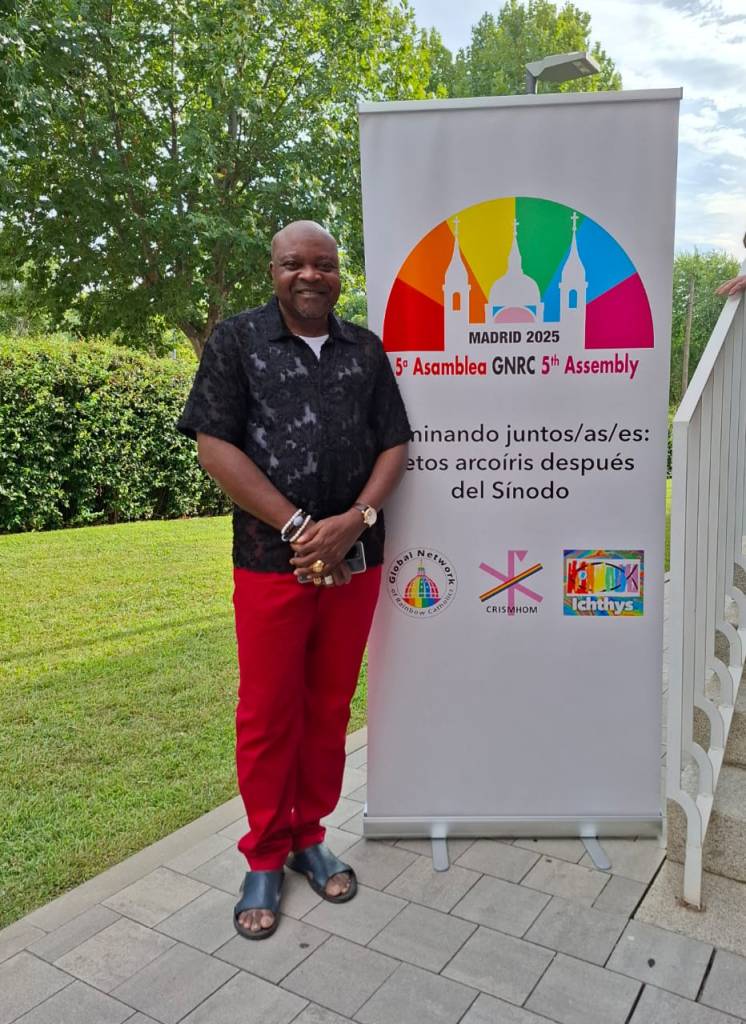
The Interfaith Diversity Network of West Africa (IDNOWA) proudly participated in the 5th Assembly of the Global Network of Rainbow Catholics (GNRC), held in Madrid, Spain. This landmark gathering brought together LGBTQ+ Catholics and allies from across the globe to reflect, pray, and strategize for a more inclusive Church.
Africa was not only present—it was central. Through the leadership of Executive Director Nana Davis Mac-Iyalla, IDNOWA amplified the voices of queer Africans whose faith journeys are often marked by courage, resistance, and deep spiritual conviction.
Key Themes from IDNOWA’s Participation
Ubuntu in Action: Davis Mac-Iyalla reminded delegates that African spirituality is rooted in community, dignity, and ancestral wisdom.
Faith Without Borders: IDNOWA called for a Church that embraces all identities, rejecting colonial-era doctrines that criminalize love.
Solidarity Across Continents: African delegates joined hands with Latin American, European, and Asian allies to affirm that inclusion is not optional—it is sacred.Quote from Davis Mac-Iyalla
“We do not simply work—we serve. Our advocacy is not a task, but a calling. Africa’s queer faithful are not asking for permission to exist. We are declaring our sacred place in the story of God.”
IDNOWA’s presence at GNRC 2025 marks a powerful step toward global solidarity and theological renewal. The network remains committed to building bridges between faith and justice across West Africa and beyond.
Davis Mac-Iyalla walks with love as his compass. In every forum, every retreat, every gathering, he speaks not from bitterness—but from a wellspring of compassion. His voice does not echo hate. It carries healing.
He reminds us that advocacy is not about opposition—it’s about invitation. An invitation to dignity, to truth, to spiritual belonging. Davis’s heart holds no space for hate, because it is already full—with the names of ancestors, the hopes of the marginalized, and the sacred fire of Ubuntu.
“We do not simply work—we serve. Our advocacy is not a task, but a calling.” — Nana Davis Mac-Iyalla
This calling is rooted in love. Fierce love. Tender love. Love that builds altars, not walls.
IDNOWA Celebrates Historic Appointment of Archbishop Cherry Vann
The Interfaith Diversity Network of West Africa (IDNOWA) warmly welcomes and celebrates the groundbreaking appointment of Bishop Cherry Vann as Archbishop of the Church in Wales — the first woman and openly LGBTQ+ clergy to lead any of Britain’s Anglican churches.
Archbishop Vann’s elevation marks a profound moment of progress for inclusive faith leadership. Her journey — from being among the first women ordained in the Church of England in 1994 to her current role — reflects a courageous commitment to justice, compassion, and spiritual authenticity. As a member of the Open Table Network and someone who lives openly with her civil partner, Wendy, Vann embodies the values of love, integrity, and belonging.
This appointment sends a powerful message to LGBTQ+ people of faith across the globe: that their identities are not barriers to spiritual leadership, but blessings to be embraced. It affirms the sacred worth of all people and the transformative potential of inclusive ministry.
IDNOWA stands in solidarity with Archbishop Vann and all those who continue to break barriers in religious spaces. We believe her leadership will inspire healing, dialogue, and renewal within the Church and beyond.
We call on faith communities across Africa and the world to reflect on this milestone and recommit to building spaces where all people — regardless of gender, sexual orientation, or background — can thrive spiritually and lead with dignity.
For media inquiries or further information, please contact:Interfaith Diversity Network of West Africa Email: interfaithdiversitynowa@gmail.com
Press Release For Immediate Release Date: 11 August 2025 Contact: Interfaith Diversity Network of West Africa (IDNOWA) Email: info@idnowa.org
IDNOWA Leads Bold Dialogue on Human Rights and Inclusion Amid Ghana’s Anti-LGBT Bill Debate
Accra, Ghana — On 4 August 2025, the Interfaith Diversity Network of West Africa (IDNOWA) hosted a landmark sensitization workshop aimed at promoting human rights awareness and fostering inclusive dialogue among religious and traditional leaders. The event comes at a critical time, as Ghana’s Parliament reconsiders the controversial anti-LGBT bill, raising alarm among civil society and international observers.
The workshop brought together a diverse group of faith leaders, human rights educators, and civil society representatives to explore the intersection of religion, culture, and inclusion. Through presentations, group discussions, and personal storytelling, participants examined the social and legal implications of the proposed legislation and reaffirmed their commitment to dignity and equality for all.
“This workshop is not just a conversation—it’s a commitment to justice,” said Davis Mac-Iyalla, Executive Director of IDNOWA. “We must continue to challenge exclusionary narratives and empower leaders to stand for compassion and equality.”
IDNOWA has been at the forefront of promoting inclusion across West Africa, using interfaith dialogue to dismantle stigma and build bridges between communities. The organization’s ongoing efforts include educational outreach, advocacy campaigns, and strategic partnerships with local and international stakeholders.
Key Outcomes: Increased empathy and understanding among religious leaders.
Commitments to promote inclusive practices within faith communities.
Heightened awareness of the anti-LGBT bill’s risks to civil liberties.
Recommendations: Continued engagement through follow-up workshops.
Development of tailored educational materials for faith communities.
Strengthened partnerships with advocacy groups to support inclusive policy dialogue.
This workshop underscores IDNOWA’s unwavering dedication to human rights and its strategic role in shaping a more inclusive West Africa.
For interviews, media inquiries, or further information, please contact: IDNOWA Communications Team 📧 info@idnowa.org 🌐 Visit our press page
Davis Mac Iyalla, a queer spiritual leader and out gay chief in Ghana, embodies defiant visibility and ancestral wisdom in equal measure
Ghana’s Parliament has reopened debate on one of Africa’s toughest anti LGBTQ+ bills, just a year after the previous version expired without presidential assent.
The reintroduced Human Sexual Rights and Family Values Bill seeks to raise prison terms for same sex intimacy and criminalise “promotion” of queer rights.
Yet even as legislators press ahead, a very different story is unfolding in the fishing town of Yamonransa on the country’s Cape Coast.
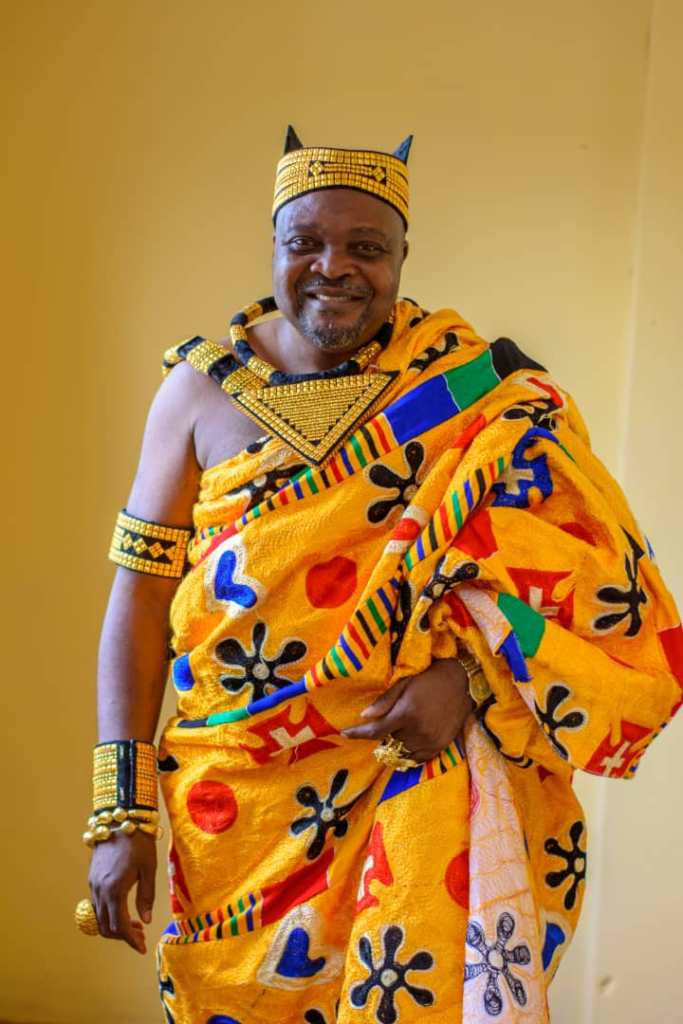
There, Nana Kwaku Gyasi, Chief Davis Mac Iyalla, who is also Executive Director of the Interfaith Diversity Network of West Africa (IDNOWA), is teaching that visibility itself can be an act of love.
“I came out the day I was born”
Mac Iyalla rejects western notions of a single, dramatic “coming out.”
“I came out to the world the day I was born,” he tells MambaOnline. “My concept of coming out is about speaking out, using your voice to challenge injustice.”
That conviction first catapulted him into headlines a quarter century ago, when he confronted the Anglican Church of Nigeria over its homophobia.
Today he carries the same fire into Ghanaian life, defiantly testifying before Parliament against the anti-LGBTQ+ bill and preaching inclusion from pulpits across West Africa.
Chosen by the ancestors
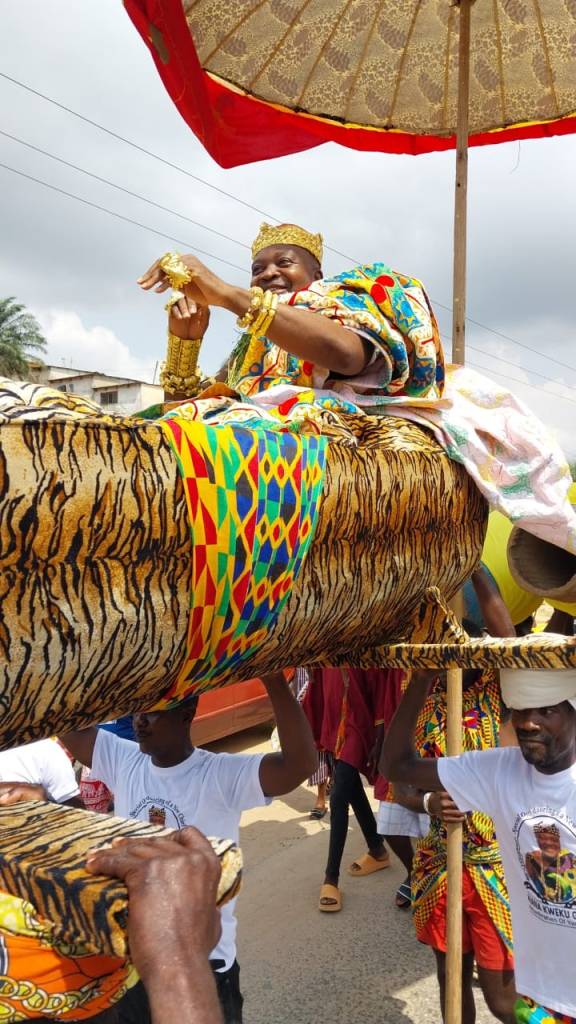
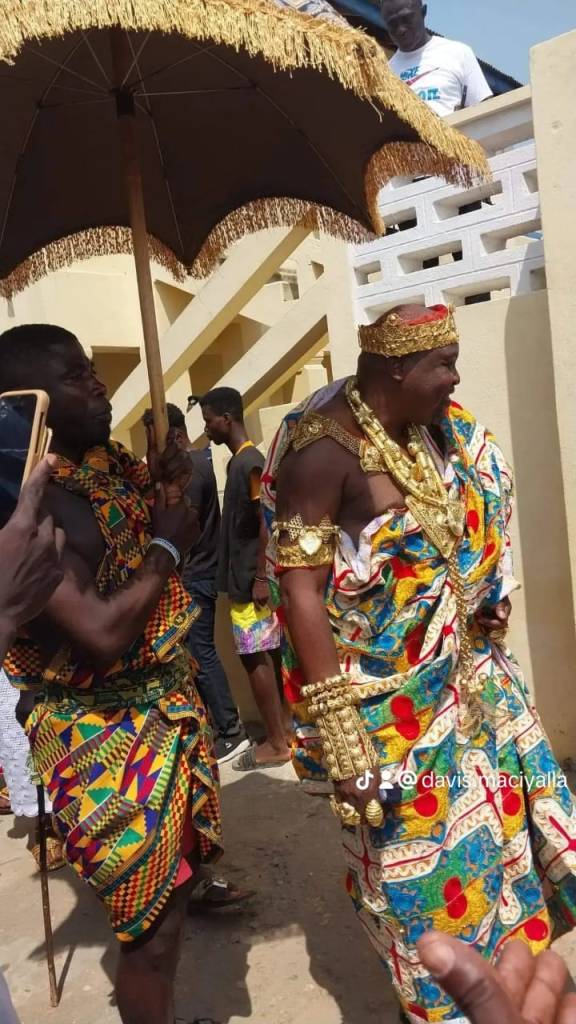
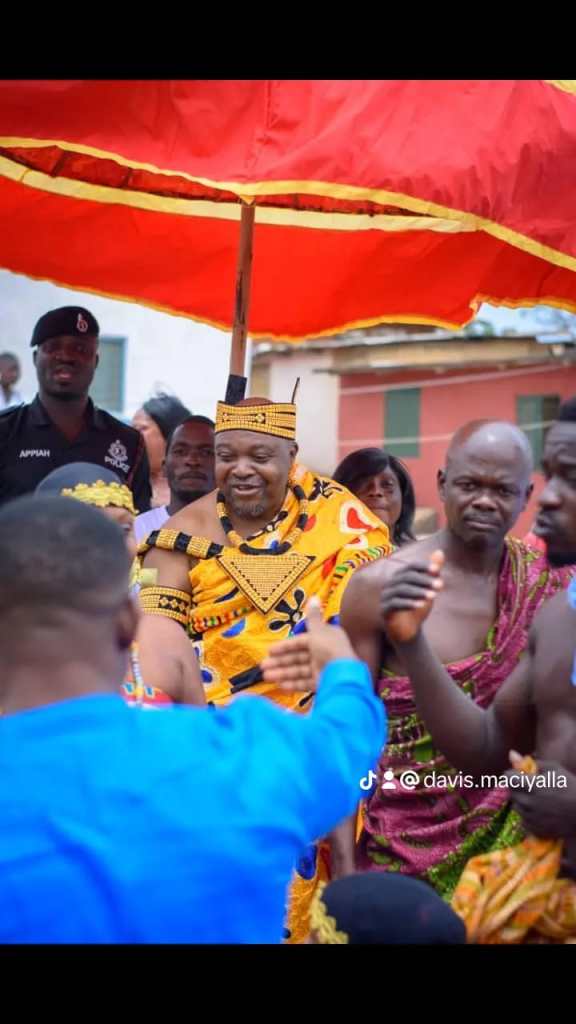
Three years ago, Mac Iyalla was lifted onto a traditional palanquin (also known as a litter, used to carry chiefs, kings, and other important figures during ceremonies and festivals) and installed as Amankorehen (development chief) of Yamonransa.
Some rival chiefs tried, literally, to topple him; the palanquin collapsed and tabloids declared that “the gods had rejected” a gay chief.
The activist tells a very different story: “I was chosen by the ancestors,” he says. “If homosexuality were truly a taboo, I would never have been allowed to sit on the stool.” (In Ghanaian chieftaincy, the stool is not just a seat but a central symbol of leadership and authority.)
His stool still stands. So do his community projects: youth apprenticeships, widows’ micro grants and IDNOWA’s dialogue circles that bring imams, pastors and traditional priests to the same table.
Chief Davis Mac Iyalla being carried on a traditional palanquin used during ceremonies and festivals
An out gay chief changing hearts at village level
While urban activists tweet and rally, Mac Iyalla works face to face with local “gate keepers”, chiefs, queen mothers and clan elders whose word shapes daily life.
“Most people don’t care about my sexuality,” he explains. “They care about the development I bring.”
That pragmatism is paying off. Elders who once kept silent now greet him publicly; church women volunteer at IDNOWA food drives; parents ask how to protect queer children rather than punish them.
“Changing attitudes takes time,” the chief says, “but conversations have begun, and that is huge for West Africa.”
Faith without fear
For Mac Iyalla, queer joy is inseparable from spirituality. IDNOWA’s credo is simple: “All humans are born free and equal.”
Founded in 2016, the network spans 11 West African countries, equipping clergy and activists to confront religiously framed homophobia with scripture, history and Ubuntu ethics.
Last September, Mac Iyalla preached in the Netherlands, urging Christians to “reshape the world by speaking out against all forms of injustice.”
A message to queer African youth
“You are not a taboo. You are not ‘un-African’. Same sex love existed on this continent long before colonial missionaries,” Mac Iyalla asserts.
“If God and your ancestors are with you, no weapon fashioned by anti gender movements will succeed.”
He urges young people who feel safe enough to “take the risk and be counted,” while reminding them that leadership also happens quietly, in classrooms, clinics and marketplaces where queer Africans already serve.
Why this story matters
Mac Iyalla’s journey does not erase Ghana’s political peril, but it illuminates a parallel reality: LGBTQ+ Ghanaians are farmers, teachers, chiefs and prayer leaders. They are “everywhere,” as he likes to say, and in many cases they are thriving.
In a season when anti queer rhetoric dominates headlines, Chief Davis Mac Iyalla stands as living proof that African tradition can coexist with and celebrate queer identity. His life invites us to imagine a future in which ancestral stools make room for every kind of child born to the continent.
Until that day arrives, he will keep doing what chiefs are meant to do: build, protect and speak the truth. And that, in itself, is queer joy.
The Equal Rights Coalition (ERC) brings together 44 member states, intergovernmental organisations and more than 100 civil society organisations to advance the rights and dignity of LGTBI communities globally. On behalf of the members of the ERC, Co-Chairs Colombia and Spain, with the support of Caribe Afirmativo and FundaciónTriángulo, declare:
That we reject all legislative amendments that seek to limit and restrict the right of LGBTI people and their allies to public assembly, public expression and privacy, under the pretext of protecting children and adolescents.
That these legislative amendments, which portray LGBTI people in a way that reinforces negative stereotypes, have serious consequences for the lives and human rights of LGBTI people, including LGBTI minors, such as prohibiting and limiting their participation in public life and generating a context of social stigmatisation that promotes and legitimises violence, discrimination and harassment.
That prohibiting by law the free expression of diversity, in books, films, performances, theatre, music or any other cultural expression, is a form of censorship that undermines human rights and democratic values and increases the vulnerability of LGBTI people. That curtailing the freedom of expression and assembly of LGBTI people, limiting or preventing public demonstration, or preventing the free expression and gender identity of transgender people, contradicts the fundamental values of dignity, freedom, equality and human rights, as enshrined in the Universal Declaration of Human Rights.
That the efforts of governments and civil society in many regions of the world to promote freedom of expression and assembly of LGBTI people should be recognised and that countries and civil society should continue to share good practices and inclusive legislation.
We therefore call on governments and international and regional organisations to reject such legislative provisions as they undermine the rights of LGBTI people, and the principles and values of democracy and human rights.
In plural and tolerant societies that respect diversity, there is no place for the prohibition of a free and non-violent demonstration such as LGBTI Pride.
Statement by the co-chairs of the ERC, Colombia and Spain, on behalf of the Equal Rights Coalition.
The Interfaith Diversity Network of West Africa (IDNOWA) extends our heartfelt wishes to all our Muslim members, partners, and allies as you celebrate Eid al-Adha. May this blessed occasion bring you and your loved ones peace, joy, and renewed strength in faith.
As a community rooted in diversity, inclusion, and respect for all beliefs, we celebrate the values of sacrifice, compassion, and unity that Eid embodies.
We are grateful for your continued contributions to our shared vision of justice, dignity, and equality for all, regardless of faith, orientation, or background. Eid Mubarak!
Mr. Davis Mac-Iyalla Executive Director Interfaith Diversity Network of West Africa








 Interfaith Diversity Network of West Africa